




What's Happening?
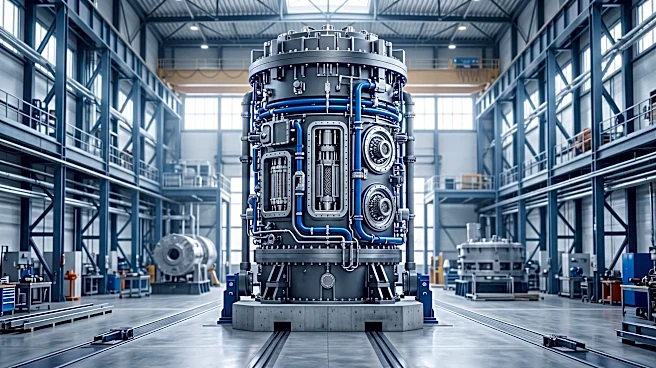
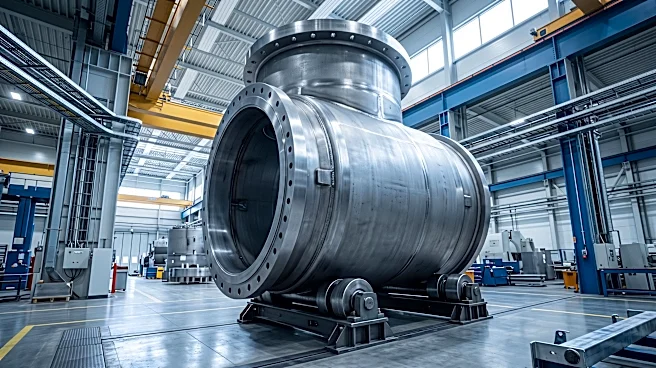
NuScale Power has entered into a manufacturing agreement with South Korean-based Doosan Enerbility to commence the fabrication of key reactor components for its NuScale Power Module. This strategic move on October 29 aims to secure pressure vessels and
other long-lead equipment, positioning NuScale to meet its commercial operation targets in the early 2030s. NuScale's Power Modules are light-water small modular reactors (SMRs) capable of producing up to 77 megawatts electric (MWe) per module, with the potential to link up to 12 modules for a total capacity of 924 MWe. The company holds a significant first-mover advantage as the only SMR developer with a Standard Design Approval (SDA) from the Nuclear Regulatory Commission (NRC), confirming its safety mechanisms and technical feasibility. This agreement is crucial for establishing NuScale's supply chain and ramping up its manufacturing capacity, as the forging and machining of nuclear-grade pressure components can take up to five years.
Why It's Important?
This manufacturing agreement is a critical step for NuScale Power in solidifying its position in the emerging small modular reactor market. By securing manufacturing capacity for essential components well in advance, NuScale mitigates potential supply chain delays and reinforces its timeline for commercial deployment in the early 2030s. This move also signals confidence in the future demand for SMR technology, which promises to deliver cheaper, safer, and zero-emission nuclear power through standardized factory production. For the U.S. energy landscape, successful deployment of NuScale's SMRs could contribute significantly to decarbonization efforts and enhance energy independence. The collaboration with a specialized supplier like Doosan Enerbility, which also has agreements with other SMR developers like X-energy, highlights the global nature of the nuclear supply chain and the increasing investment in advanced nuclear technologies. However, NuScale still needs to secure major anchor customers to fully de-risk its commercialization pathway.
What's Next?
NuScale Power's immediate next steps will involve the actual fabrication of reactor components by Doosan Enerbility, ensuring that these critical parts are ready for future SMR deployments. The company will likely intensify its efforts to secure firm commercial commitments and major anchor customers, which are essential for translating its manufacturing readiness into operational projects. While NuScale has a collaborative framework agreement with ENTRA1 and the Tennessee Valley Authority to explore deploying up to 6 gigawatts of NuScale-powered SMR capacity, actual deployment depends on further definitive agreements. The industry will be watching for additional customer announcements and progress on regulatory approvals for specific project sites. The success of these initial manufacturing efforts and subsequent customer acquisitions will be pivotal in determining NuScale's long-term market penetration and its ability to deliver on the promise of SMR technology.
Beyond the Headlines
The agreement between NuScale Power and Doosan Enerbility underscores a broader trend in the nuclear industry: the shift towards modular, factory-fabricated components to streamline construction and reduce costs. This approach aims to overcome historical challenges associated with large-scale, custom-built nuclear power plants, which often faced significant delays and budget overruns. The emphasis on a standardized design and modular construction could revolutionize nuclear power deployment, making it more accessible and scalable for various applications, including powering data centers and industrial facilities. Furthermore, the international collaboration in the nuclear supply chain, exemplified by a U.S. company partnering with a South Korean manufacturer, highlights the global effort to advance clean energy technologies. This could lead to increased international cooperation in nuclear safety standards, regulatory harmonization, and technology transfer, fostering a more robust and resilient global nuclear energy sector. The long-term implications include a potential acceleration of nuclear power's role in achieving global climate goals and enhancing energy security.