






What's Happening?
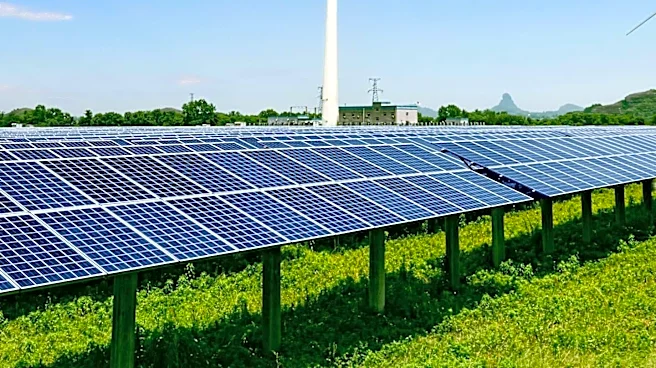
IRIS Optronics, a developer of full-color Cholesteric Liquid Crystal Display (ChLCD) e-Paper, has announced significant advancements in its Infinity® solar-powered ChLCD e-Paper series. The company has introduced a 31.5-inch large-format outdoor commercial
display, which it claims is the only mass-producible product of its size currently available. Concurrently, IRIS Optronics has developed an embedded perovskite-powered ChLCD e-Paper solution for indoor displays. This indoor solution integrates perovskite photovoltaic film within the e-Paper module, allowing it to convert low-intensity ambient light into electricity. This technology aims to reduce energy consumption and carbon emissions, enabling more environmentally friendly and sustainable display solutions. The 10-inch indoor Infinity® display can generate enough energy under 400 lux indoor lighting to refresh four times daily.
Why It's Important?
These advancements by IRIS Optronics represent a significant step forward in sustainable display technology, with potential impacts across various U.S. industries. The development of large-format, solar-powered outdoor displays offers a greener alternative for commercial signage, public information displays, and advertising, reducing reliance on grid electricity and lowering operational costs. The indoor perovskite-powered solution could revolutionize smart IoT devices and indoor commercial displays by enabling self-powered functionality, reducing the need for external power sources and battery replacements. This technology aligns with growing demands for energy efficiency and reduced carbon footprints in commercial and public sectors. For the U.S. market, this could lead to wider adoption of sustainable display solutions, fostering innovation in smart city infrastructure, retail, and public transportation, while also contributing to broader environmental goals by decreasing energy consumption and associated emissions.
What's Next?
The mass production capability of the 31.5-inch outdoor display suggests it will soon be available for commercial deployment, potentially leading to its adoption in various outdoor advertising and public information applications across the U.S. The embedded perovskite indoor solution is expected to further enhance the self-powering capabilities of indoor displays, opening new avenues for energy-autonomous devices in retail, healthcare, and smart home sectors. We can anticipate increased research and development in perovskite technology, given its advantages over traditional silicon-based solar cells, such as higher light absorption and lower manufacturing costs. This could lead to more widespread integration of perovskite into other low-power electronic devices. The success of these products may also spur competition and innovation in the sustainable display market, driving down costs and expanding the range of applications for self-powered e-paper technology.
Beyond the Headlines
The integration of solar power and perovskite technology into e-paper displays by IRIS Optronics signifies a deeper trend towards energy autonomy and sustainability in electronics. Ethically, this technology promotes responsible consumption and production by minimizing energy waste and environmental impact. Legally, the widespread adoption of such energy-efficient displays could influence future building codes and environmental regulations, encouraging the use of sustainable technologies in commercial and public infrastructure. Culturally, it reinforces the growing societal value placed on eco-friendly products and solutions, potentially shifting consumer expectations for electronic devices. In the long term, self-powered displays could become a standard feature in smart cities and IoT ecosystems, contributing to a more interconnected, energy-efficient, and sustainable urban environment. This innovation also highlights the potential of advanced materials like perovskite to drive the next generation of renewable energy solutions beyond traditional solar panels.