









What's Happening?
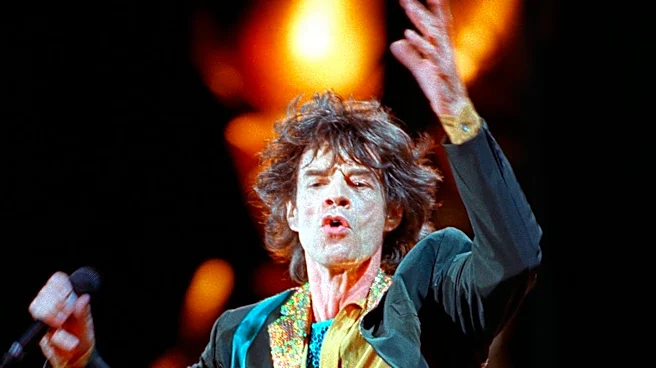
Mick Jagger, the iconic frontman of The Rolling Stones, recently expressed his views on aging during an interview on The New York Times podcast, 'The Interview.' At 82, Jagger candidly stated that he finds nothing particularly beneficial about getting
older, dismissing the notion that age brings wisdom. Despite acknowledging the physical limitations that come with age, Jagger remains enthusiastic about the prospect of touring. He mentioned that while his bandmate Keith Richards finds touring challenging at their age, Jagger himself is open to the idea of a world tour to support their latest album, 'Foreign Tongues,' released on July 10, 2026. Jagger's comments highlight his enduring passion for performing and his willingness to adapt to the demands of touring, even considering longer residencies if necessary.
Why It's Important?
Mick Jagger's perspective on aging and his continued enthusiasm for touring underscore the broader trend of older individuals remaining active in their careers. This is particularly relevant in the U.S., where Census Bureau data indicates that Americans over 75 are increasingly part of the workforce. Jagger's stance challenges societal expectations about retirement and aging, suggesting that passion and engagement in one's work can persist well into later life. For the music industry, Jagger's willingness to tour could influence other aging artists to continue performing, potentially reshaping the landscape of live music and entertainment. Additionally, his comments may resonate with older audiences who see Jagger as a symbol of vitality and longevity.
What's Next?
Looking ahead, The Rolling Stones may embark on a world tour to promote their new album, 'Foreign Tongues,' depending on the health and willingness of the band members. Jagger's openness to touring suggests that fans could see more live performances, possibly in unique locations as he expressed interest in visiting 'weird countries.' The band's decisions will likely be influenced by logistical considerations and the health of its members. If touring proves unfeasible, longer residencies at specific venues could be an alternative, allowing the band to perform without the rigors of constant travel. The music industry and fans alike will be watching closely to see how The Rolling Stones navigate these decisions.
Beyond the Headlines
Mick Jagger's reflections on aging and his career highlight broader cultural and societal themes. His comments challenge the stereotype that aging necessarily leads to decline, instead presenting a narrative of continued relevance and adaptability. This perspective may inspire discussions about ageism and the value of experience in various fields. Furthermore, Jagger's willingness to continue performing could influence public perceptions of aging, encouraging a more positive view of growing older. As the population ages, figures like Jagger who defy conventional expectations may play a role in reshaping societal attitudes towards aging and retirement.