





What's Happening?
Grin Cupola, an art gallery, performance space, and project preparation facility, is continuing its operations on Joe Lacina's family farm just north of Grinnell, Iowa. The space, housed in a former 1930s corn crib and other renovated farm buildings,
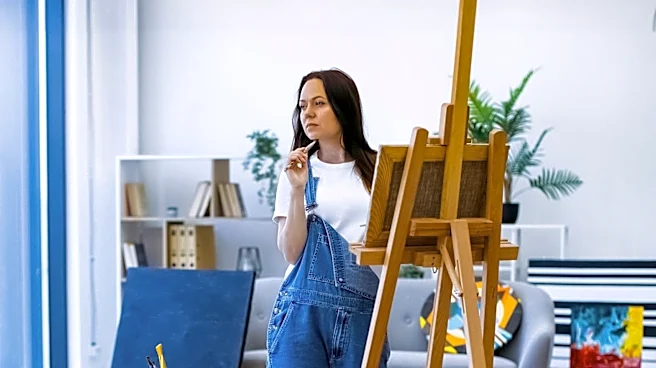
offers artists a venue to build and showcase their work. Lacina, who previously ran the Grin City Collective artist residency on the same property, now operates Grin Cupola as a part-time endeavor. The facility provides extensive resources, including a full woodshop, welding area, and studios equipped with a kiln, potter's wheels, and a 3D printer. Artists are encouraged to submit proposals for exhibitions and projects, with Lacina noting an informal review process where projects are rarely turned down. The space is open by appointment or during scheduled events.
Why It's Important?
The continued operation of Grin Cupola is significant for the U.S. art community, particularly in rural areas, by providing accessible and expansive facilities for artists. In a landscape where art spaces can be limited, Grin Cupola offers a unique environment for creation and exhibition, including large open areas and outdoor grounds that are often difficult for artists to secure. This initiative supports artistic development and cultural enrichment outside of major urban centers, fostering local talent and potentially attracting artists from further afield. The informal proposal process also lowers barriers to entry for artists, promoting a more inclusive and experimental approach to art creation and display. The integration of modern tools like 3D printing and AI software in art production at Grin Cupola also highlights evolving trends in contemporary art.
What's Next?
Grin Cupola is actively accepting proposals from artists for future projects and exhibitions. Lacina plans further renovations to the main corn crib building, including expanding the gallery space, and intends to convert a blue metal barn into a flexible space for collaborative steel sculptures or a dance hall. The facility will continue to host performances, pop-up shows, and traditional exhibitions. The focus remains on assisting artists and providing them with the necessary space and tools. The long-term vision for Grin Cupola involves maintaining its part-time nature to prevent burnout, ensuring its sustained contribution to the regional art scene.
Beyond the Headlines
The transformation of a former corn crib and tofu factory into an art space like Grin Cupola reflects a broader trend of adaptive reuse of agricultural and industrial structures in the U.S. This not only preserves historical architecture but also injects new life into rural economies and communities. The emphasis on providing ample space and resources addresses a common challenge for artists, particularly those working on large-scale installations. Furthermore, Lacina's personal journey, including his experience building installations at the Burning Man festival, underscores the diverse influences shaping contemporary art practices and the value of hands-on experience in fostering creative environments. The project also subtly touches upon the evolving role of AI in artistic creation, a burgeoning field with ethical and creative implications.