









What's Happening?
Dale Earnhardt Jr. has publicly addressed the reasons behind his decision to shorten his autograph to 'Dale Jr.' and remove 'Earnhardt' from his race car's name rail. He explained that these actions were partly due to ongoing legal issues surrounding
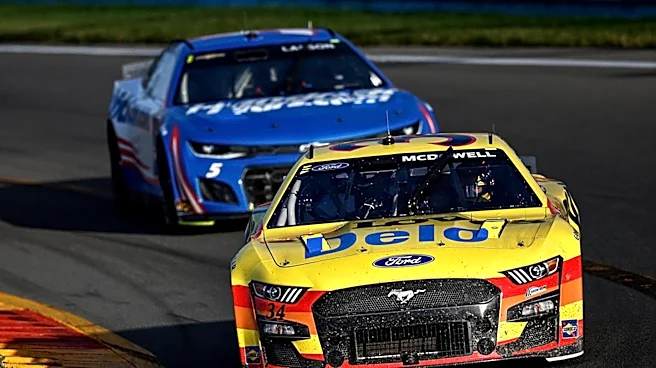
the use of the Earnhardt name. Following the death of his father, Dale Earnhardt Sr., in 2001, his stepmother, Teresa Earnhardt, took control of Dale Earnhardt Inc. (DEI) and the commercial rights associated with the Earnhardt name. This led to disputes over control and commercial use, impacting Dale Jr.'s career and branding. He noted that while he shortened his autograph for speed, the legal context gave this choice significant weight. The trademark for the No. 1 logo, held by Teresa Earnhardt, even led to Ross Chastain's team having to alter a number font on a throwback scheme in 2022 due to infringement. Dale Jr. also mentioned that he still trusts Teresa with protecting the family's legacy and name, despite their estranged relationship.
Why It's Important?
This situation highlights the complex interplay between personal legacy, family dynamics, and intellectual property rights within the high-stakes world of professional sports, particularly NASCAR. The legal battles over the Earnhardt name and associated trademarks demonstrate how a family name can become a valuable commercial asset, leading to significant disputes over its control and usage. For athletes and public figures, managing their personal brand and intellectual property is crucial, as these assets can generate substantial revenue through merchandise, endorsements, and media appearances. The case also underscores the challenges faced by family-owned businesses, especially after the death of a prominent founder, where control and succession can lead to internal conflicts with broad public and commercial implications. The impact on branding, such as Dale Earnhardt Jr.'s decision to alter his autograph and car markings, illustrates the direct consequences of these legal and familial disputes on an individual's public identity and career trajectory.
What's Next?
While Dale Earnhardt Jr. has built a separate business identity through JR Motorsports and Dirty Mo Media, the underlying issues regarding the Earnhardt name and its commercial rights may continue to evolve. The ongoing estrangement between Dale Jr. and Teresa Earnhardt suggests that a full resolution of the family's internal disputes might still be distant, despite Dale Jr.'s expressed hope for reconciliation. Future developments could involve further legal challenges or agreements regarding the use of the Earnhardt name in various commercial ventures. The precedent set by the trademark disputes, such as the one involving Ross Chastain's team, indicates that Teresa Earnhardt remains vigilant in protecting the trademarks under her control. The evolution of Dale Jr.'s own trademarked name and brand, separate from DEI, will likely continue to be a focus as he expands his business interests and media presence. The situation also serves as a cautionary tale for other prominent families and businesses regarding the importance of clear succession planning and intellectual property management.
Beyond the Headlines
The Earnhardt family's legal and personal struggles over the name extend beyond mere business disputes, touching upon themes of legacy, identity, and control. For Dale Earnhardt Jr., the decision to distance himself from the full 'Earnhardt' name in certain contexts reflects a broader effort to forge his own identity while navigating the shadow of his legendary father. This struggle for individual identity within a powerful family legacy is a common challenge for children of famous figures. The case also highlights the ethical considerations of trademark law, particularly when it involves a family name that carries significant emotional and historical weight for a fan base. The public's perception of these disputes can influence brand loyalty and the overall image of the sport. Furthermore, the story underscores the long-term impact of intellectual property decisions made decades ago, as trademarks can continue to be points of contention and value for generations. The ongoing narrative of the Earnhardt family serves as a microcosm of broader societal issues concerning inheritance, control, and the commercialization of personal and familial heritage.