





What's Happening?
A historic former jail in Perrysburg, Ohio, built in 1847, is currently under contract with a contingent offer for $400,000. The property, known as the Old Wood County Jail, served as a county lockup until 1870 and then as a city jail until 1899. It was
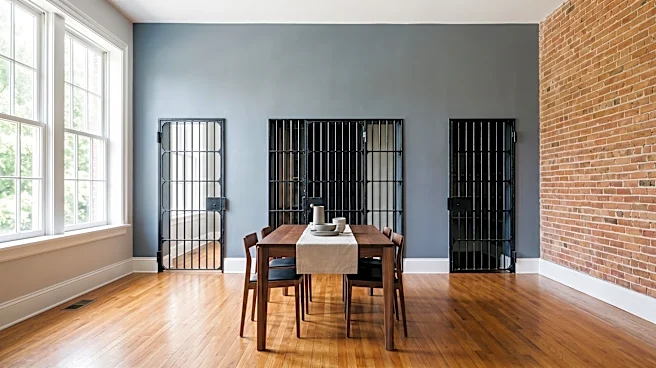
purchased by the family of listing agent Caroline Hoffmann in 1918 and has remained in their ownership for over a century. Initially converted into three apartments, the building was later transformed into a single-family residence by Hoffmann's parents approximately 15 years ago. The 2,960-square-foot brick property retains many original features, including six jail cells in the dining room, five of which have been repurposed as closets or pantries, while one remains in its original state with a cot. An original 250-pound, lead-lined door from the jail's infirmary is still present in an upstairs bedroom, and another was repurposed into a dining table by Hoffmann's father.
Why It's Important?
The sale of this unique property highlights a growing interest in adaptive reuse and the preservation of historical structures in the U.S. real estate market. Converting a former jail into a family home demonstrates creative approaches to urban renewal and the potential for unconventional properties to find new life. The $400,000 offer reflects the market's valuation of historical significance combined with residential functionality, appealing to buyers who appreciate distinctive character over conventional layouts. This trend can contribute to the revitalization of older neighborhoods and offer sustainable alternatives to new construction. The family's century-long ownership and their desire to find 'generational stewards' for the property also underscore a broader cultural value placed on heritage and the responsible transfer of historical assets, influencing how such properties are marketed and perceived by potential buyers who seek to connect with a building's past.
What's Next?
The property is currently under contract, indicating that a new owner is likely to take stewardship of this historic home. The Hoffmann family's intention to find buyers who will embrace and preserve its unique character suggests that the next chapter for the Old Wood County Jail will likely involve continued efforts to maintain its historical integrity while adapting it to modern living. The new owners may choose to further integrate the jail cells into the home's design or continue the current balance of preservation and functionality. This sale could also inspire other property owners and developers to consider the adaptive reuse of other unconventional historical buildings, potentially leading to more creative conversions of old civic or industrial structures into residential or commercial spaces across the country. The attention garnered by this listing may also increase public interest in historical preservation efforts.
Beyond the Headlines
The transformation of a former jail into a family home raises intriguing questions about the intersection of history, memory, and domestic space. Living among 19th-century jail cells, even repurposed ones, creates a unique psychological and aesthetic environment that challenges conventional notions of comfort and home. This property serves as a tangible reminder of the past, prompting reflection on justice, confinement, and the evolution of societal norms. The family's decision to preserve elements like the original cells and doors speaks to a desire to honor the building's history rather than erase it, turning a potentially grim past into a distinctive feature. This approach to historical preservation, where the past is integrated into daily life, offers a powerful narrative about how communities can reconcile with and reinterpret their heritage, fostering a deeper connection to local history and architectural legacy.