
What's Happening?
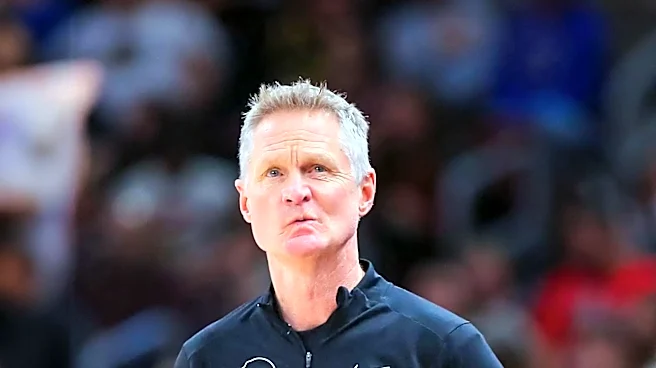
Steve Kerr, head coach of the Golden State Warriors, has once again voiced his opinion on the need to shorten the NBA season. Kerr believes that the current 82-game schedule is too demanding on players,
leading to increased injuries and impacting the overall competitiveness and health of the league. He suggests reducing the schedule by approximately 10 games. The modern style of play, characterized by faster pace and more open space, requires players to exert themselves more intensely than in previous eras. This heightened physical strain is cited as a primary reason for the growing number of player injuries, particularly lower-leg issues, which cause star players to miss significant time. Kerr's advocacy for a shorter season is rooted in the belief that it would benefit player well-being and enhance the quality of play.
Why It's Important?
The call for a shorter NBA season by a prominent figure like Steve Kerr highlights a significant concern within professional basketball regarding player welfare and the long-term sustainability of athletes' careers. A reduction in games could lead to fewer injuries, allowing star players to participate more consistently and perform at higher levels throughout the season and into the playoffs. This would not only improve the quality of the product for fans but also protect the substantial investments teams make in their players. For the NBA, a healthier league could translate to more compelling matchups, increased fan engagement, and potentially higher revenue in the long run, despite a decrease in the number of games. However, it would also require careful negotiation with broadcast partners and other stakeholders who benefit from the current game volume.
What's Next?
While Steve Kerr has consistently advocated for a shorter season, any significant change to the NBA schedule would require extensive discussions and agreements between the league, the National Basketball Players Association (NBPA), and broadcast partners. The league would need to assess the financial implications of reducing games, including potential impacts on television deals, ticket sales, and merchandise. Player health and safety will likely remain a central point of discussion in future collective bargaining agreements. It is probable that the debate over the optimal number of games will continue, with ongoing research into player load management and injury prevention influencing potential future adjustments to the NBA calendar.
Beyond the Headlines
The discussion around shortening the NBA season extends beyond immediate player health and competitive balance, touching upon the evolving nature of professional sports and athlete management. It raises questions about the balance between entertainment value, commercial interests, and the physical limits of human performance. A shift to fewer games could also influence player development strategies, team roster construction, and the overall perception of the sport's intensity. Furthermore, it could set a precedent for other professional sports leagues facing similar challenges with demanding schedules and athlete burnout, potentially leading to broader changes in how professional sports are structured globally.