

What's Happening?
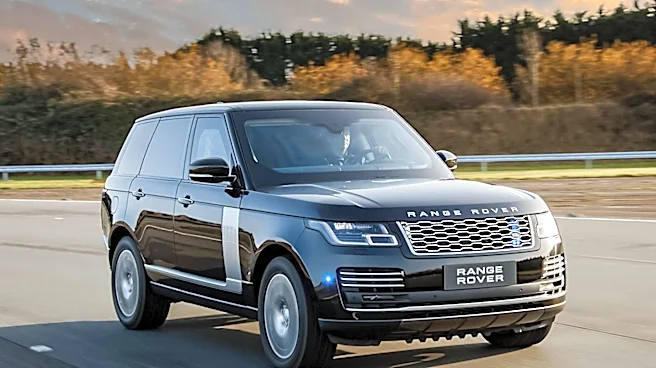
Jaguar Land Rover (JLR) has announced that the all-electric Range Rover GT is scheduled to reach customers in early 2027. This timeline was confirmed by JLR CFO Richard Molyneux during Tata Motors Passenger Vehicles’ second-quarter earnings call. The
electric model will be released first, with a hybrid version to follow at an unconfirmed later date. JLR has not yet disclosed most of the technical specifications for the battery-powered Range Rover GT, including battery capacity, driving range, charging speeds, or power output. The vehicle will utilize the company’s Electrified Modular Architecture. The decision to prioritize the electric variant is driven by significant demand, as JLR has already received nearly 5,000 orders for the electric Range Rover, indicating that current demand for its fully electric models exceeds production capacity.
Why It's Important?
This announcement is significant for the automotive industry, particularly within the luxury SUV segment, as it signals JLR's commitment to electrification and its strategy to meet growing consumer demand for electric vehicles. By prioritizing the all-electric Range Rover GT, JLR is positioning itself to compete in the rapidly expanding EV market, potentially influencing other luxury automakers to accelerate their own electric transitions. The high number of pre-orders suggests a strong market appetite for premium electric SUVs, which could lead to increased investment in EV technology and infrastructure across the U.S. The delay of the hybrid version indicates a strategic shift towards fully electric powertrains, reflecting broader industry trends and regulatory pressures to reduce emissions. This move could also impact supply chains for EV components and raw materials, as JLR scales up its electric vehicle production.
What's Next?
Following the confirmed early 2027 launch of the all-electric Range Rover GT, JLR is expected to gradually release more technical details regarding the vehicle's specifications, such as battery capacity, driving range, and charging capabilities. The company will also need to ramp up its production capacity to meet the high demand indicated by the nearly 5,000 pre-orders. Further announcements regarding the launch date for the hybrid version of the Range Rover GT are anticipated, though no specific timeline has been provided. As the launch approaches, JLR will likely focus on marketing and distribution strategies to ensure a successful rollout in key markets, including the U.S. The performance and reception of the electric Range Rover GT could influence JLR's future electrification plans for its other models and potentially impact the competitive landscape of the luxury EV market.
Beyond the Headlines
The prioritization of the all-electric Range Rover GT over its hybrid counterpart highlights a broader industry trend towards full electrification, moving beyond transitional hybrid technologies. This shift reflects not only consumer demand but also evolving environmental regulations and corporate sustainability goals. For the U.S. market, this could mean a faster transition away from internal combustion engines in the luxury segment, potentially accelerating the development of charging infrastructure and influencing consumer perceptions of electric vehicle performance and luxury. The success of the electric Range Rover GT could also set a precedent for other premium brands, encouraging them to invest more heavily in dedicated EV platforms and technologies. This move by JLR underscores the increasing pressure on automakers to innovate in the electric space, balancing performance, range, and luxury to capture a discerning market.