





What's Happening?
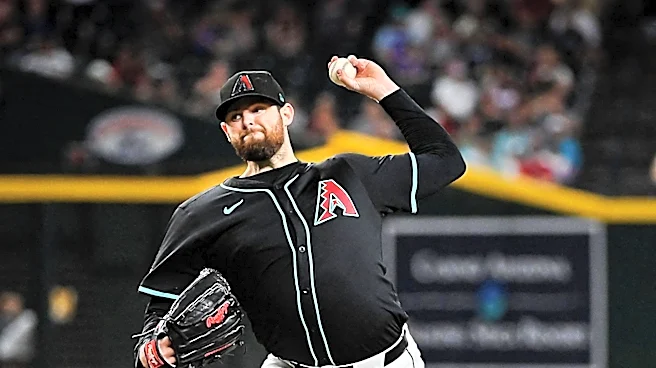
Merrill Kelly, a pitcher for the Arizona Diamondbacks who previously played for the SK Wyverns (now SSG Landers) from 2015 to 2018, has shared his sentiments regarding the impending closure of Jamsil Baseball Stadium. The stadium, which opened in 1982,
is scheduled to cease operations after the 2026 season. Kelly expressed surprise upon hearing the news, highlighting its iconic status and historical significance, including its role in the Olympics. He recalled his memorable experience winning the 2018 Korean Series at Jamsil, describing the sight of 30,000 spectators and the moment of championship confirmation as unforgettable. While acknowledging the stadium's historical value, Kelly also noted the inconveniences faced by away teams due to limited facilities, particularly in the locker rooms, which he described as basic compared to those in Major League Baseball. The LG Twins and Doosan Bears, who currently share Jamsil as their home stadium, will temporarily relocate to the main Olympic stadium from the 2027 season before moving into a new dome stadium targeted for completion in 2032.
Why It's Important?
The closure of Jamsil Baseball Stadium and the development of new facilities signify a broader trend in sports infrastructure, emphasizing modern amenities and improved fan and player experiences. For U.S. baseball players like Merrill Kelly who have played internationally, these developments highlight the evolving standards and expectations across different leagues. The transition to new stadiums, as anticipated by Kelly, is expected to address long-standing issues such as inadequate away team facilities, which can impact player comfort and performance. This move also reflects a commitment to enhancing the overall appeal of professional baseball, potentially attracting more talent and investment. The comparison drawn by Kelly between older Korean stadiums and Major League Baseball facilities underscores the global benchmark set by U.S. sports leagues in terms of infrastructure and player support. The investment in new, state-of-the-art stadiums could also boost local economies through increased tourism and event hosting capabilities.
What's Next?
Jamsil Baseball Stadium will officially close after the 2026 season. Following its closure, the LG Twins and Doosan Bears will utilize a temporary stadium, converted from the main Olympic stadium, as their home ground starting from the 2027 season. The long-term plan involves the construction of a new dome stadium, with the goal of hosting its opening game in 2032. Merrill Kelly, along with other stakeholders, anticipates that these new facilities will offer significant improvements, including enhanced amenities for both home and away teams. The development of modern stadiums is expected to elevate the overall experience for players and fans, aligning with contemporary standards seen in other major baseball leagues globally. This transition period will likely involve careful logistical planning to ensure a smooth continuation of league play while construction is underway, potentially influencing team strategies and fan engagement during the interim.
Beyond the Headlines
The retirement of Jamsil Baseball Stadium, a venue with significant historical and emotional ties for many, including international players like Merrill Kelly, underscores the constant tension between preserving heritage and embracing modernization in sports. While Kelly's fond memories highlight the stadium's legacy, his comments on the outdated facilities for visiting teams reveal a practical need for upgrades. This situation reflects a global challenge in sports: how to balance the nostalgic value of older venues with the demands for state-of-the-art infrastructure that enhances player welfare and fan experience. The move towards new, more advanced stadiums, as seen in Korea, could set a precedent for other leagues considering similar transitions, emphasizing the importance of modern amenities in attracting and retaining top talent. This shift also raises questions about the cultural impact of replacing iconic landmarks with new constructions, and how communities adapt to such changes while maintaining a connection to their sporting past.