



What's Happening?
S&P Global Ratings has affirmed Oman’s long-term sovereign credit rating at BBB- and its short-term rating at A-3, maintaining a stable outlook. Concurrently, S&P has raised its forecast for Oman’s real GDP growth in 2026 to 3.5%, a significant increase
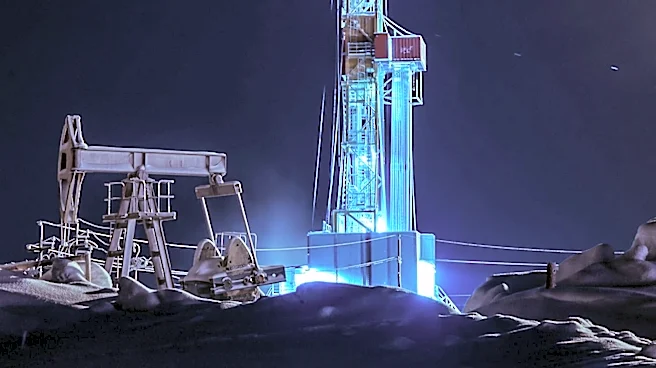
from its previous projection of 1.6%. This upward revision is attributed to stronger hydrocarbon production, ongoing fiscal consolidation efforts, and resilient external buffers. The assessment highlights that Oman’s economic stability is supported by higher oil and gas production and continued energy exports. The country's strategic geographic position, allowing key energy shipments to access the Arabian Sea without full reliance on the Strait of Hormuz, has also been a crucial factor. S&P expects economic growth to moderate to an average of approximately 2.4% annually between 2027 and 2029. The latest assessment also acknowledges improvements in Oman’s fiscal and external positions, alongside continuous progress in public finance reforms, transparency, and economic governance.
Why It's Important?
The affirmation of Oman's investment-grade rating and the raised growth forecast are important indicators of economic stability in a key Middle Eastern nation. For the U.S., this stability can contribute to broader regional security and energy market predictability, as Oman is a significant oil and gas producer. A stable Oman reduces potential geopolitical risks in a critical region for global energy supplies, which can indirectly benefit U.S. energy consumers and businesses by mitigating price volatility. The emphasis on fiscal consolidation and public finance reforms in Oman also reflects a global trend towards more sustainable economic practices, which aligns with international financial stability goals. While the U.S. is not directly impacted by Oman's GDP growth, the health of global energy markets and the stability of key producing nations are vital for the U.S. economy. The resilience of Oman's economy, despite regional disruptions, underscores the importance of diversified economic strategies and robust fiscal policies in navigating global challenges.
What's Next?
S&P Global Ratings indicates that further improvements in Oman’s credit profile will depend on sustained fiscal and economic reforms, continued growth in non-oil sectors, and progress in developing domestic capital markets. Any weakening in reform momentum or significant deterioration in fiscal and external balances could exert pressure on the sovereign rating. Oman is projected to record a fiscal surplus of 4.8% of GDP in 2026, followed by approximately 2.2% in 2027, with public debt expected to be around 30.2% of GDP by the end of 2026. The country's external position is also anticipated to remain in surplus. Hydrocarbons will continue to play a major role, accounting for about 30% of GDP and 70% of government revenue, with oil production expected to reach around 1.1 million barrels per day in 2026. The non-oil economy is also expanding, with growth in trade, logistics, information technology, and financial services, indicating ongoing diversification efforts.
Beyond the Headlines
Oman's ability to maintain an investment-grade rating and achieve a higher growth forecast amidst regional geopolitical tensions highlights the strategic importance of its geographic location and its proactive economic policies. The country's efforts to diversify its economy beyond hydrocarbons, while still relying heavily on them, represent a delicate balancing act common to many resource-rich nations. The focus on public finance reforms and transparency also reflects a broader global push for good governance, which can attract foreign investment and foster long-term stability. The resilience of Oman's ports and energy infrastructure, even with disruptions in the Strait of Hormuz, underscores the critical role of infrastructure development in national and regional economic security. This case study offers insights into how nations can leverage strategic assets and implement reforms to buffer against external shocks and maintain economic momentum.