





What's Happening?
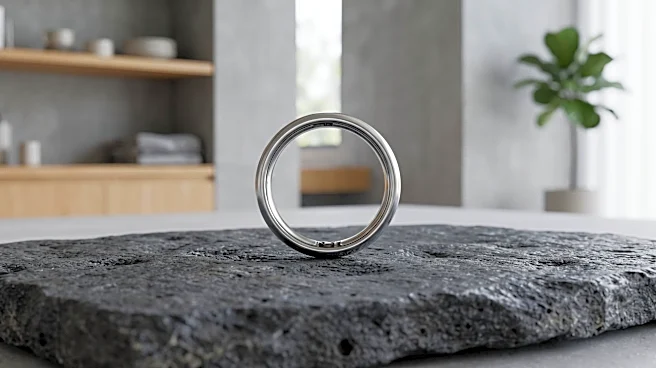
The Oura Ring 5, described as the world's smallest smart ring, has been released, offering enhanced health tracking capabilities. This new iteration tracks over 50 health metrics, including sleep stages, daily activity, daytime stress, and cardiovascular
health. It also incorporates a dedicated suite of women's health features, covering cycle tracking, pregnancy, and menopause insights. The device boasts re-engineered sensors for greater accuracy, claiming 99% heart rate accuracy, 98% heart rate variability accuracy, and sleep tracking comparable to a clinical sleep lab. The Oura Ring 5 is designed to be thin, light, and comfortable, resembling regular jewelry, and offers up to one week of battery life on a single charge. It also syncs with over 40 apps, such as Natural Cycles, Flo, and Strava, and utilizes Oura Advisor, an AI-powered feature, to provide personalized guidance based on collected data.
Why It's Important?
The introduction of the Oura Ring 5 signifies a continued trend in the U.S. market towards integrating advanced health monitoring into everyday wearables. Its focus on comprehensive metrics, including women's health, and high accuracy could appeal to a broad demographic seeking detailed insights into their well-being without the bulk of traditional smartwatches. For the health and fitness industry, this device sets a new benchmark for discreet, continuous health tracking, potentially influencing product development and consumer expectations. The emphasis on 'research-grade accuracy' could also bolster consumer trust in wearable health data, which has historically faced skepticism. Furthermore, the integration with numerous health apps and AI-driven personalized guidance suggests a move towards more holistic and actionable health management, empowering individuals to take a more proactive role in their healthspan and longevity.
What's Next?
The Oura Ring 5 is expected to continue its market penetration, particularly among individuals focused on fitness, performance, and general health monitoring. Its ability to provide detailed health metrics with high accuracy may lead to increased adoption by athletes and health-conscious consumers. The company's strategy of offering a sizing kit and a voucher for the ring suggests an effort to overcome initial adoption barriers related to fit and cost. Future developments could include further integration with medical platforms, potentially bridging the gap between consumer wearables and clinical health management. The ongoing collection of extensive biometric data could also contribute to broader health research, offering insights into population-level health trends and the effectiveness of various lifestyle interventions.
Beyond the Headlines
The Oura Ring 5's advanced capabilities highlight a broader societal shift towards personalized health data and preventative care. By offering detailed insights into sleep, activity, and cardiovascular health, the device empowers users to make informed lifestyle choices that could impact their long-term health and longevity. The concept of 'biological age' and the ring's ability to estimate aspects like 'Cardiovascular Age' underscore a growing interest in understanding and potentially influencing the aging process. This trend raises ethical considerations regarding data privacy and the interpretation of complex health metrics by non-medical professionals. As wearables become more sophisticated, the line between consumer health tracking and medical diagnostics may blur, necessitating clearer guidelines and user education on the limitations and appropriate use of such devices.