







What's Happening?
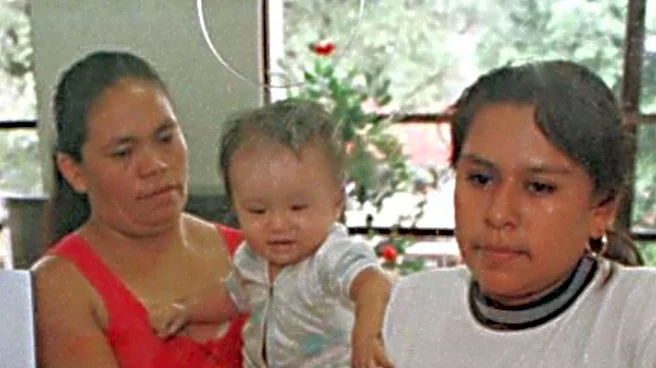
Two families in El Salvador, led by Douglas Francisco Peralta and Ana Odenia Gonzales Anaya, have successfully paid off their home mortgages, achieving full homeownership. This milestone highlights the effectiveness of The Fuller Center for Housing's
partnership housing model. The program emphasizes that individuals in need of decent housing receive an opportunity to become partners in building their future, rather than just charity. Homeowners contribute through 'sweat equity' (labor on their homes or others'), make affordable mortgage payments, and commit to helping their neighbors. The mortgage repayments are then reinvested to fund future housing projects, creating a sustainable cycle of giving that enables more families to achieve homeownership. The Fuller Center's board chairman, Jeff Cardwell, emphasized the foundational role of a decent home in a family's success, particularly for children's happiness, health, and educational outcomes.
Why It's Important?
This achievement underscores the significant impact of sustainable housing initiatives on individual families and broader community development. The partnership housing model empowers families by fostering self-reliance and financial independence, moving them from housing insecurity to asset ownership. This model not only provides shelter but also builds community resilience by encouraging mutual support and reinvestment. For the U.S., such models offer insights into effective strategies for addressing housing insecurity, particularly in communities where traditional market-based solutions are insufficient. The success in El Salvador demonstrates that empowering families through ownership and participation can lead to long-term stability and improved social outcomes, such as better health and education for children. It also highlights the role of non-profit organizations in creating scalable solutions for global housing challenges.
What's Next?
The success of families like Peralta's and Anaya's will likely inspire continued and expanded efforts by The Fuller Center for Housing and similar organizations in El Salvador and other regions. The model's proven sustainability, where mortgage repayments fund future projects, suggests a potential for organic growth and increased impact. Future initiatives may focus on scaling up operations, attracting more donors and volunteers, and potentially influencing local housing policies to support similar self-help housing programs. The emphasis on the positive impact on children's well-being could also lead to collaborations with educational and health organizations to create more holistic community development programs. The ongoing success stories will serve as powerful testimonials to advocate for partnership-based housing solutions globally.
Beyond the Headlines
The partnership housing model transcends mere housing provision; it cultivates a sense of dignity, responsibility, and community among participants. By requiring sweat equity and affordable repayments, it challenges the traditional charity paradigm, fostering a sense of ownership and contribution. This approach can have profound psychological and social benefits, breaking cycles of poverty and dependence. Ethically, it aligns with principles of empowerment and self-determination. Culturally, it reinforces community bonds and mutual aid. The long-term implications include the creation of more stable, thriving communities with increased social capital, reduced crime rates, and improved public health outcomes. This model offers a blueprint for sustainable development that prioritizes human agency and collective well-being, demonstrating that housing solutions can be both effective and transformative.