






What's Happening?
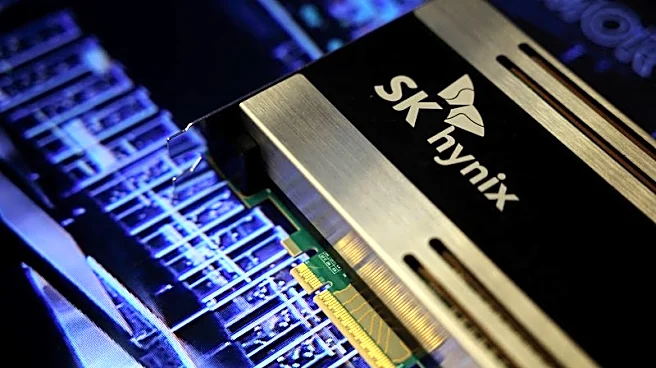
Citi forecasts that global memory-chip shortages will intensify through 2031, driven by the escalating demand for high-bandwidth memory (HBM), DRAM, and NAND chips, as artificial intelligence (AI) systems increasingly adopt 'continual learning.' This
approach involves AI models continuously updating with new information while retaining previously acquired knowledge, thereby boosting demand for both operational memory and data storage. Specifically, Citi projects HBM bit demand to surge by 62% year-over-year to 75.2 billion gigabits in 2027, followed by another 69% increase to 127.0 billion gigabits in 2028. For DRAM, global demand is expected to grow by 30% in 2027 and 35% in 2028, while supply growth is projected at 19% and 22% for the respective years, leading to widening shortfalls. Similarly, NAND memory demand is anticipated to rise by 29% in 2027 and 33% in 2028, against supply increases of 21% and 25%, indicating a growing imbalance. The bank also expects enterprise solid-state drive (eSSD) demand to expand as AI systems require more storage capacity.
Why It's Important?
This forecast highlights a critical bottleneck in the rapidly expanding AI sector, indicating that the availability of essential memory components may not keep pace with the technological advancements and deployment of AI systems. For U.S. industries heavily reliant on AI, such as data centers, cloud computing, and advanced manufacturing, these projected shortages could lead to increased costs, delayed product development, and potential disruptions in service delivery. Companies like Micron, a key U.S. memory chip manufacturer, stand to benefit from sustained high demand and potentially higher pricing, but also face pressure to ramp up production significantly. The widening supply-demand gap could also spur greater investment in domestic semiconductor manufacturing and research, aligning with U.S. strategic goals for technological independence and supply chain resilience. However, if the shortages become severe, it could impede the growth of AI innovation and adoption across various sectors, affecting the competitiveness of U.S. technology firms on a global scale.
What's Next?
In response to the anticipated shortages, memory chip manufacturers are expected to prioritize investments in expanding production capacities and accelerating research and development for next-generation memory technologies. Companies like Samsung Electronics, SK Hynix, Micron, SanDisk, and Kioxia, identified by Citi as preferred memory semiconductor stocks, will likely be at the forefront of these efforts. The industry may see increased strategic partnerships and collaborations to secure raw materials and optimize manufacturing processes. Furthermore, the emphasis on 'continual learning' in AI development suggests a long-term shift in chip design and architecture, requiring closer integration between memory and processing units. The U.S. government and industry stakeholders may also explore policy measures, such as incentives or subsidies, to bolster domestic memory chip production and mitigate future supply chain vulnerabilities, especially given the strategic importance of AI. The adoption rate of continual learning systems will be a key factor to monitor, as it underpins Citi's long-range forecast for these deepening shortages.
Beyond the Headlines
The deepening memory chip shortages underscore a broader challenge in the technology ecosystem: the physical limitations and complex interdependencies of the global semiconductor supply chain. Beyond economic implications, these shortages could trigger a re-evaluation of AI development strategies, potentially leading to more efficient algorithms and hardware designs that optimize memory usage. Ethically, the intense competition for limited resources could exacerbate inequalities in access to advanced AI technologies, favoring larger corporations with greater purchasing power. Environmentally, the massive expansion of chip manufacturing and AI data centers will demand significant energy and water resources, raising concerns about sustainability and the carbon footprint of the digital economy. This situation highlights the need for a holistic approach that considers not only technological advancement but also resource management, ethical deployment, and environmental impact in the pursuit of AI innovation.