




What's Happening?
A British mother has gained attention on social media for successfully transforming discarded wooden pallets into a functional and aesthetically pleasing outdoor kitchen. This DIY project highlights the potential for upcycling readily available materials
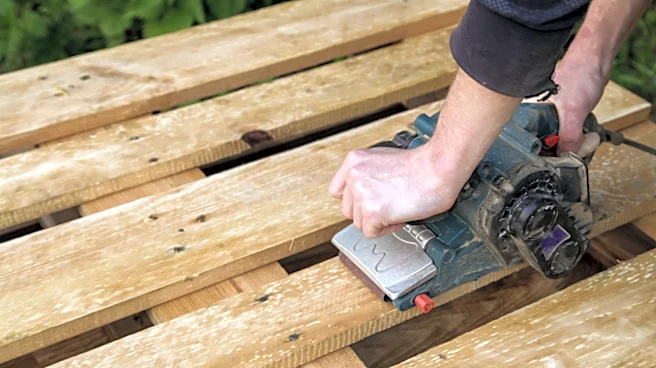
to create valuable home additions. The process involved using approximately eight pallets, which were either sourced free or purchased affordably. These pallets were then dismantled and repurposed to construct various components of the outdoor kitchen, including a counter base, shelving, backsplash, and an overhead pergola. The project also incorporated an old desk and leftover tiles, further reducing costs and demonstrating resourceful design.
Why It's Important?
This initiative is significant as it showcases a practical and budget-friendly approach to home improvement and sustainable living. For U.S. homeowners, it provides an accessible model for creating functional spaces while minimizing waste and expenditure. The project underscores the versatility of wood pallets as a DIY material, offering both rustic and streamlined aesthetic possibilities. It also raises awareness about the importance of material safety, advising users to select heat-treated pallets and avoid those marked 'MB' (methyl bromide) due to pesticide treatment. This encourages responsible upcycling practices, ensuring that repurposed materials are safe for their intended use, especially in food preparation areas.
What's Next?
The viral success of such projects on social media platforms is likely to inspire more individuals in the U.S. to undertake similar upcycling endeavors. This could lead to an increased demand for discarded pallets and other reclaimed materials, potentially fostering local economies around material reuse. DIY communities and online tutorials may proliferate, offering guidance and creative ideas for transforming waste into valuable household items. Furthermore, businesses specializing in reclaimed materials or offering workshops on upcycling techniques might see a surge in interest. This trend could also influence product design, with manufacturers exploring ways to incorporate recycled or upcycled components into their offerings.
Beyond the Headlines
Beyond the immediate practical benefits, this upcycling trend has deeper implications for consumer culture and environmental consciousness. It promotes a shift from a linear 'take-make-dispose' economy to a more circular model, where materials are kept in use for as long as possible. Ethically, it encourages resourcefulness and reduces reliance on new materials, thereby lessening environmental impact. Culturally, it fosters a sense of accomplishment and creativity among individuals, empowering them to personalize their living spaces sustainably. This movement also highlights the value of community sharing and resourcefulness, as many pallets are obtained for free from local businesses, strengthening local connections and reducing waste collectively.