



What's Happening?
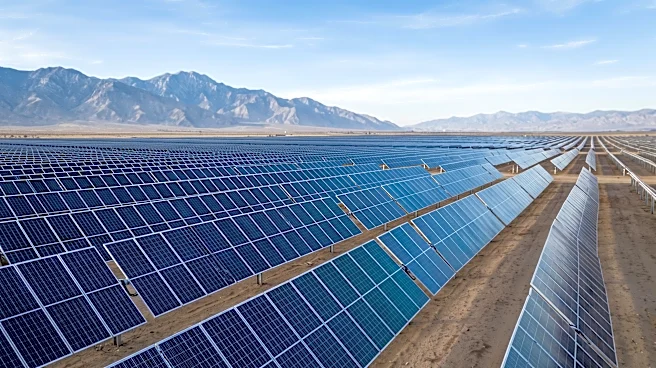
Avantus, a developer of utility-scale solar and storage projects, has signed 20-year power purchase agreements (PPAs) with Pacific Gas and Electric Company (PG&E) for the Buttonbush 1A and 1B projects. These projects, located in western Kern County, California,
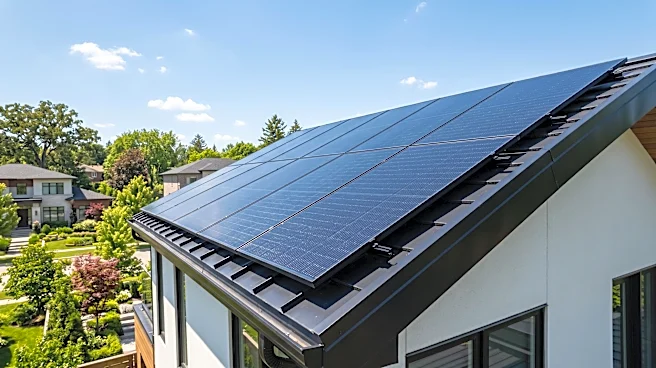
are the initial phases of the Buttonbush Solar Center. They are designed to provide a combined 800 megawatts (MW) of solar generation and 3,200 megawatt-hours (MWh) of battery storage to California's electrical grid. This capacity is projected to power approximately 381,000 homes annually. The agreements represent some of the largest utility-scale solar and storage offtake deals in California to date. Construction is anticipated to commence in 2027, with commercial operations expected by 2029.
Why It's Important?
These agreements are crucial for California's energy future, addressing the state's growing demand for clean and reliable power. The Buttonbush projects represent an estimated $3 billion infrastructure investment, which is expected to generate hundreds of millions of dollars in local property tax revenue for Kern County public services over their operational lifespan. Additionally, the projects are projected to create approximately 900 union construction jobs and provide permanent operations and maintenance jobs for decades. By building on water-stressed farmland, the initiative also helps meet state groundwater requirements, offering stable revenue streams for farmers through long-term leases while preserving scarce water resources for other agricultural uses. This move by PG&E signifies a significant step towards integrating more clean energy solutions into its portfolio and ensuring a dependable, affordable, and clean resource for its customers.
What's Next?
Construction of the Buttonbush 1A and 1B projects is slated to begin in 2027, with commercial operations expected to commence in 2029. Over the next two decades, these projects will contribute significantly to California's clean energy supply, helping PG&E meet the increasing energy needs across its service area. The successful implementation of these large-scale solar and storage facilities could set a precedent for future clean energy developments in the state, potentially influencing other utilities and developers to pursue similar large-scale renewable energy initiatives. The long-term benefits, including job creation, tax revenue, and environmental sustainability, will be realized as the projects move from construction to full operation.
Beyond the Headlines
The Buttonbush projects highlight a broader trend in the U.S. energy sector: the transition towards large-scale renewable energy sources coupled with advanced storage solutions. This shift is driven by both environmental concerns and the economic benefits of clean energy. The strategic placement of these projects on water-stressed farmland also points to an innovative approach to land use, where agricultural land can serve a dual purpose, providing both economic stability for landowners and contributing to renewable energy goals. This model could be replicated in other regions facing similar challenges, fostering sustainable development and resource management. The substantial investment and job creation underscore the economic engine that the clean energy sector is becoming, moving beyond environmental mandates to become a significant contributor to local economies.