




What's Happening?
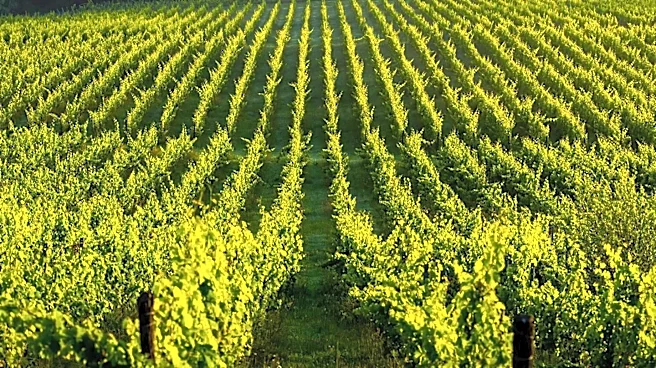
Michigan winemakers are increasingly concerned about the impact of wildfire smoke on their grape crops, a new climate-related challenge for the state's nearly $9 billion wine industry. When wildfire smoke blanketed northern Michigan skies in July, Kasey
Wierzba, general manager and executive winemaker at Shady Lane Cellars, observed a distinct 'pinky, peachy haze' over the vineyards. While the smoke from distant Canadian and Minnesota wildfires did not linger long enough to affect the current vintage, and the grapes were in an immature 'buckshot berry stage,' the incident served as a stark warning. Winemakers are now grappling with the potential for 'smoke taint,' where prolonged exposure to smoke can impart undesirable flavors like barbecued food or burnt bacon to finished wines. This issue is already familiar to wine regions on the West Coast and in Australia, where hotter, larger wildfires are becoming more common due to climate change. Ben Montpetit, chair of viticulture and enology at the University of California, Davis, notes that the number of places exposed to smoke taint is increasing as climate change fuels drier summers and more wildfires.
Why It's Important?
The emergence of wildfire smoke as a significant concern for Michigan's wine industry highlights the far-reaching economic impacts of climate change. A nearly $9 billion industry is now facing a threat that could compromise the quality and marketability of its products, potentially leading to substantial financial losses for vineyards and wineries. This situation forces winemakers to adapt to unpredictable environmental conditions, adding complexity and cost to their operations, such as investing in laboratory testing for smoke compounds. The issue also underscores the interconnectedness of global climate patterns, as smoke from distant wildfires can travel thousands of miles to affect agricultural regions. For consumers, this could mean changes in wine quality or availability from affected regions. The challenge extends beyond Michigan, as other wine-producing areas globally are also confronting similar threats, indicating a systemic problem for the viticulture industry worldwide.
What's Next?
Michigan winemakers are preparing for future smoke events by considering sending grape samples to labs for smoke compound detection, although current testing methods often require waiting until fermentation to fully assess smoke taint. Research into smoke taint mitigation strategies is ongoing, with increased state and federal support, including a directive in the latest draft of the U.S. farm bill for more research and development in this area. However, experts like Ben Montpetit believe that smoke taint will remain a persistent problem as wildfires continue. Winemakers are also adapting to other climate-related changes, such as early spring frosts and fluctuating temperatures. The industry will likely see continued efforts in research, development of new viticultural practices, and potentially changes in grape varietals or winemaking techniques to build resilience against these environmental challenges. Collaboration between growers, researchers, and policymakers will be crucial to safeguard the future of the wine industry.
Beyond the Headlines
The 'smoke taint' phenomenon in winemaking is a poignant example of how climate change can subtly yet profoundly alter cultural and economic landscapes. Wine, deeply intertwined with regional identity and tradition, faces a threat that challenges its very essence. This issue extends beyond economic loss; it touches upon the sensory experience of wine, potentially redefining what constitutes a 'good' vintage in affected regions. The need for advanced scientific research to understand and mitigate smoke taint reflects a broader trend of science being called upon to address complex environmental challenges impacting agriculture. Furthermore, the story highlights the psychological toll on farmers and producers who must contend with unpredictable 'climate chaos,' forcing them to constantly adapt and innovate in an industry built on long-term planning and stability. It underscores the vulnerability of even established industries to the cascading effects of environmental shifts.