


What's Happening?
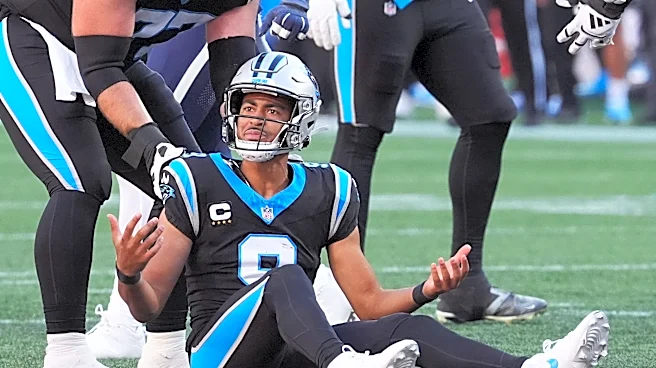
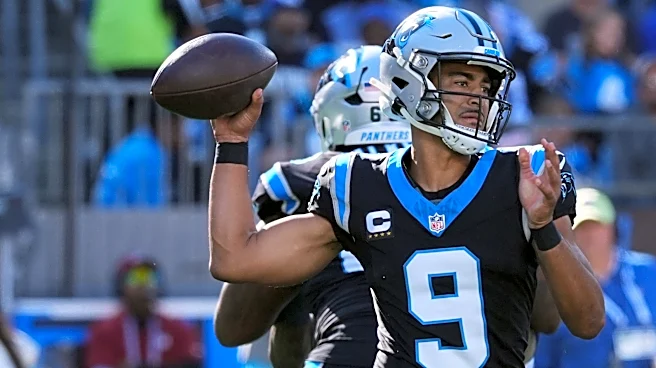
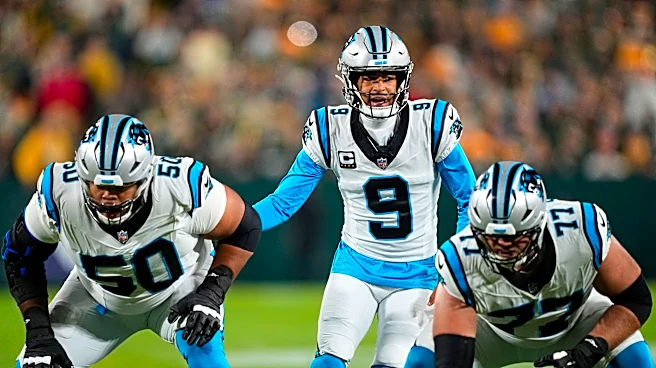
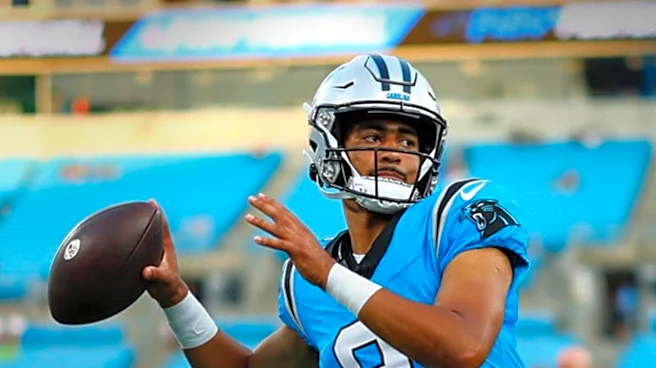
Haynes King, a rookie quarterback from Georgia Tech, has been designated as the Carolina Panthers' emergency third quarterback for their Week 9 game against Denver. This marks a continuation of his role throughout the current season, where he has consistently
been inactive but available in an emergency capacity. According to Darin Gantt of the Panthers' official site, King will only be eligible to enter the game if both starting quarterback Bryce Young and backup Kenny Pickett are unable to play due to injury, illness, or ejection. Despite being on the roster, King has not yet taken a regular-season snap in the NFL.
Why It's Important?
The consistent designation of Haynes King as the emergency third quarterback highlights the strategic depth NFL teams maintain at the critical quarterback position. While King's role means he is unlikely to see game action under normal circumstances, his presence ensures the team has a contingency plan for unforeseen events that could sideline both primary quarterbacks. This practice is crucial for maintaining competitive integrity and avoiding situations where a team might be left without a viable quarterback during a game. For King, this role provides valuable exposure to NFL game-day routines and preparation, even without playing time, contributing to his development as a professional athlete.
What's Next?
Haynes King is expected to continue in his role as the emergency third quarterback for the foreseeable future, barring any significant changes to the Panthers' quarterback depth chart or injuries to Young or Pickett. His development will likely focus on practice and learning the team's offensive schemes, preparing him for a potential future role as a backup or even a starter. For the Panthers, maintaining a healthy and prepared quarterback room, including an emergency option like King, remains a priority as they navigate the demanding NFL season.
Beyond the Headlines
The NFL's emergency quarterback rule, which allows a third quarterback to be active without counting against the 46-man game-day roster, underscores the league's emphasis on player safety and competitive balance. This rule prevents teams from being severely disadvantaged by unexpected quarterback injuries during a game. For players like King, it offers a pathway into the league and an opportunity to be part of an NFL team, even if their immediate impact is not on the field. It also reflects the high value placed on quarterback talent and the need for robust contingency planning in professional football.