



What's Happening?
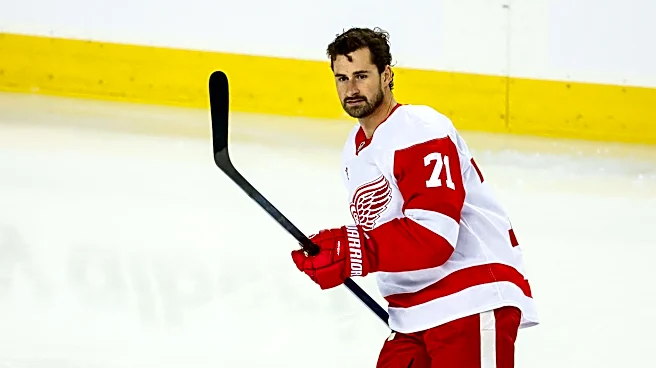
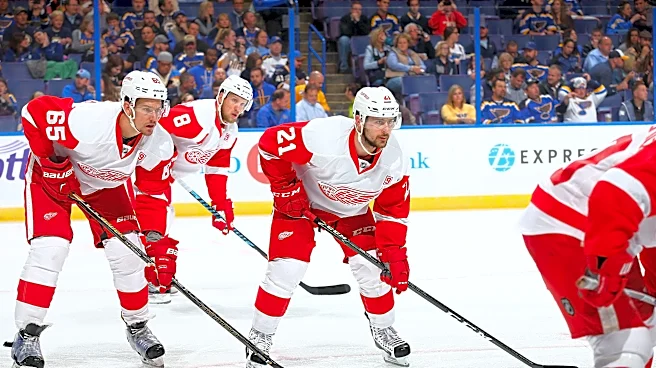
The Detroit Red Wings are at a pivotal juncture, needing to make significant moves to return to the playoffs in the near future. With key players Moritz Seider and Lucas Raymond approaching the end of their current contracts, the team aims to capitalize
on their current core. General Manager Shawn Horcoff faces the challenge of retooling the roster quickly, as the current season is anticipated to end without a playoff berth. The Red Wings are looking to improve their goaltending, maintain their defensive core, and inject new talent into their forward lines. This retooling strategy involves leveraging their 2027 first-round draft pick, developing current prospects like Emmitt Finnie and Marco Kasper into impact players, and making strategic acquisitions in free agency. The goal is to avoid a repeat of the Dylan Larkin situation, where a star player's contract situation becomes a prolonged issue.
Why It's Important?
The Red Wings' ability to retool quickly has significant implications for the franchise's future competitiveness and financial stability. A failure to make the playoffs within the next one to two seasons could lead to dissatisfaction among star players like Seider, Raymond, and DeBrincat, potentially resulting in difficult contract negotiations or trade requests. Successfully acquiring an instant-impact player with their 2027 first-round pick, either through the draft or a trade, is crucial for immediate roster improvement. Developing prospects like Finnie and Kasper into reliable first-line centers would address a critical need and allow other promising players, such as Michael Hage, to develop at a more measured pace. Furthermore, the Red Wings' substantial cap space offers a unique opportunity to attract high-caliber free agents, which could dramatically alter the team's trajectory and fan engagement. The decisions made this offseason will determine whether the team can transition from a rebuilding phase to a consistent playoff contender.
What's Next?
The Red Wings are expected to focus on three key areas in the coming months. First, their 2027 first-round draft pick must yield an immediate impact player, whether through a direct draft selection or by trading the pick for an established talent. The team possesses five first-round picks over the next three years, providing ample capital for such moves. Second, prospects Emmitt Finnie or Marco Kasper need to demonstrate the capability to perform as a first-line center, taking on defensive responsibilities and contributing offensively to allow other young players to develop. Third, Detroit plans to be aggressive in free agency, utilizing its significant cap space to attract top-tier unrestricted or restricted free agents. This could involve offering aggressive offer sheets to restricted free agents or pursuing high-profile players like Jason Robertson, Vince Dunn, or Nikita Kucherov. These actions are critical for the Red Wings to accelerate their path back to playoff contention.
Beyond the Headlines
The Red Wings' current situation highlights a broader trend in professional sports where teams must balance long-term rebuilding with the immediate pressures of fan expectations and player contract cycles. The emphasis on leveraging draft picks for instant impact rather than solely for future development reflects a strategic shift driven by the urgency to compete. The use of aggressive offer sheets in free agency, while risky, underscores a willingness to disrupt traditional team-building approaches to secure talent. This approach could set a precedent for other teams in similar positions, potentially altering the landscape of player movement and contract negotiations across the league. The success or failure of Detroit's retooling efforts will provide valuable insights into the effectiveness of such aggressive strategies in a competitive sports environment, influencing future management decisions across the NHL.