





What's Happening?
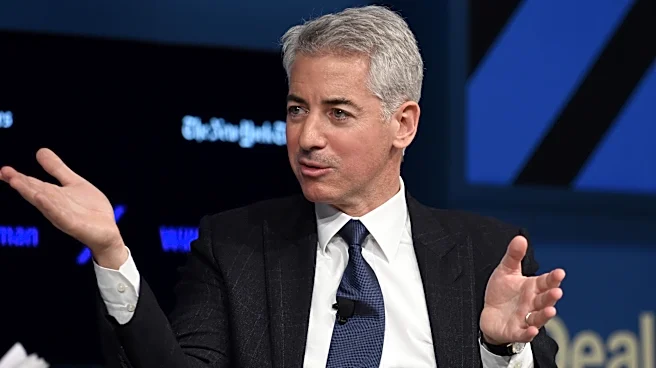
Billionaire investor Bill Ackman and his firm, Pershing Square, have increased their stake in Netflix, a tech stock that has seen a 44% decline over the past year. This move comes despite widespread concerns about declining viewer engagement and the impact
of artificial intelligence and short-form content on the streaming industry. According to the Q3 earnings call, Netflix co-CEO Greg Peters acknowledged that while U.S. engagement is solid, there is room for improvement. Pershing Square initially held a stake in Netflix years ago, closed it, and then re-opened a new position in Q2 2026, increasing it by 18% in Q3. As of the end of Q3, Netflix constitutes 3.5% of Pershing's portfolio. Pershing's interim report in June suggested that investors might be underestimating the cost of creating high-quality, long-form content and noted that short-form content has not significantly impacted Netflix's results.
Why It's Important?
Bill Ackman's contrarian investment strategy and his firm's impressive track record make his increased investment in Netflix noteworthy for the U.S. financial markets. His confidence in Netflix, despite its recent stock performance and industry headwinds, could signal a potential undervaluation or a belief in the company's long-term growth prospects. This move challenges the prevailing investor sentiment that has been spooked by concerns over content creation costs, lower barriers to entry for content, and the rising popularity of short-form content platforms like YouTube. If Ackman's bet pays off, it could influence other institutional investors and potentially lead to a re-evaluation of Netflix's stock and the broader streaming sector. Conversely, if Netflix continues to struggle, it could reinforce concerns about the future of traditional streaming models in an evolving digital landscape.
What's Next?
The market will closely watch Netflix's performance in the coming quarters to see if Ackman's investment thesis proves correct. Future earnings calls and subscriber reports will be critical indicators of whether Netflix can address declining engagement concerns and adapt to the changing content consumption landscape. The company's strategy regarding content investment, particularly in long-form, high-quality productions, will be under scrutiny. Additionally, the broader impact of AI on content creation and distribution, as well as the continued rise of short-form content, will shape the competitive environment for Netflix. Investors will also be keen to observe if other major investment firms follow Pershing Square's lead or if they maintain a more cautious stance on the streaming giant.
Beyond the Headlines
Ackman's investment highlights a fundamental debate within the investment community regarding the long-term viability and valuation of established tech companies in rapidly evolving sectors. It underscores the tension between short-term market reactions to perceived threats and a long-term value-oriented investment approach. The emphasis by Pershing Square on the 'compute-intensive' nature of high-quality content creation also subtly points to the increasing intersection of technology infrastructure and media production, suggesting that companies with robust technological capabilities might have a competitive edge. This situation could also spark discussions about the role of activist investors in shaping corporate strategy and market perception, particularly when they take significant positions in companies facing industry-wide shifts.