





What's Happening?
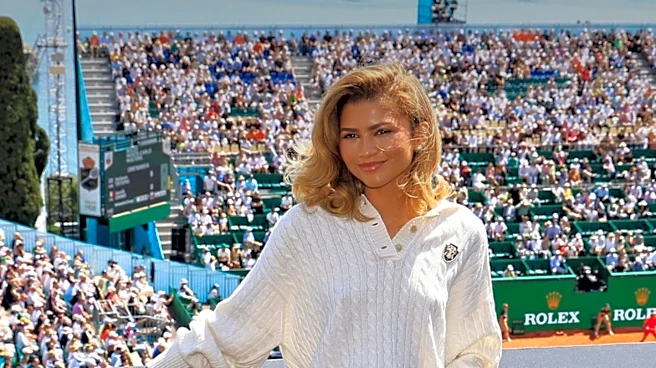
A viral video showing actress Zendaya's interaction with Brigitte Macron, the First Lady of France, at a Louis Vuitton fashion show in Paris has ignited an etiquette debate online. The clip, originally posted on TikTok by Paris Match, shows Zendaya seated
at the event, greeting Bernard Arnault, chairman and CEO of LVMH. Shortly after, Brigitte Macron approaches, attempting to greet Zendaya, who remains seated for a few seconds before acknowledging and politely greeting the First Lady. The incident has garnered significant attention on social media platforms, particularly X (formerly Twitter), with many users criticizing Zendaya for not standing up to greet Macron immediately. Comments range from calling it a lack of basic politeness to defending Zendaya, suggesting she might not have recognized Macron or that the environment was crowded.
Why It's Important?
This viral moment highlights the intense scrutiny public figures, especially celebrities, face regarding social etiquette and protocol, particularly in international settings. The debate reflects differing cultural expectations and interpretations of respect. For Zendaya, a prominent American actress with a global following, such an incident can lead to discussions about celebrity conduct and the perceived responsibilities that come with fame. It also brings to light the broader conversation about how public figures navigate formal and informal social interactions, especially when interacting with political figures. The incident, while seemingly minor, can influence public perception and spark broader discussions about manners, respect, and the unwritten rules of social engagement in high-profile environments. It also underscores the power of social media to amplify and dissect every public interaction, often leading to widespread commentary and judgment.
What's Next?
The immediate aftermath of such a viral moment typically involves continued online discussion and media coverage, with various commentators offering their perspectives on the etiquette involved. It is unlikely to have significant long-term consequences for Zendaya's career or public image, as similar incidents involving celebrities often fade from public discourse relatively quickly. However, it may prompt public figures and their teams to be more conscious of social protocols in future high-profile events, especially when interacting with dignitaries. The incident could also lead to further discussions about the pressures faced by celebrities in public settings and the often-unrealistic expectations placed upon them by the public and media. Ultimately, the debate will likely serve as a temporary talking point about social graces in the age of constant digital scrutiny.
Beyond the Headlines
Beyond the immediate discussion of celebrity etiquette, this incident touches upon deeper cultural nuances regarding respect and hierarchy. In many cultures, standing to greet an elder or a person of higher status is a deeply ingrained sign of respect. The online debate reveals a clash between traditional expectations of deference and modern, perhaps more casual, social norms. It also highlights the role of media, particularly social media, in shaping and policing public behavior. The rapid dissemination of such clips and the subsequent public 'trial' underscore how digital platforms can create a hyper-aware environment where every action of a public figure is scrutinized. This phenomenon raises questions about privacy, the burden of constant public performance, and the evolving standards of social conduct in a globally interconnected world. The incident, therefore, serves as a micro-example of broader societal shifts in how we perceive and judge public interactions.