







What's Happening?
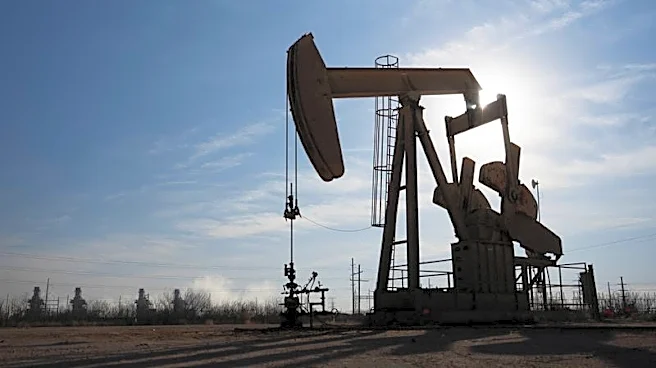
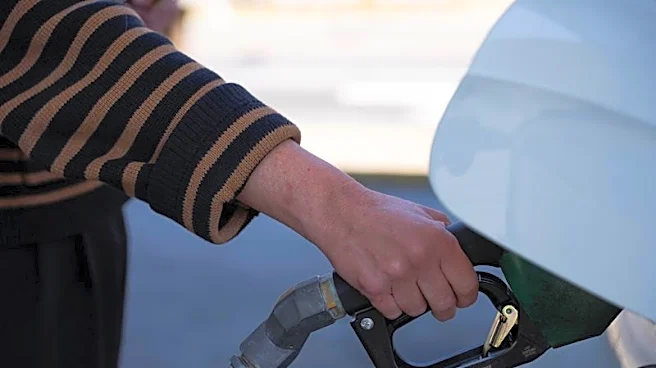
The average price of gasoline in the United States has fallen below $4 per gallon, reaching $3.999 according to AAA. This marks a significant psychological shift as the summer driving season begins and geopolitical tensions ease. The decrease follows
a U.S.-Iran agreement to reopen the Strait of Hormuz, a critical passage for global oil supply. The closure of the strait had previously led to a sharp increase in oil and gas prices. While the national average has dropped, regional disparities remain, with some states experiencing higher prices than others.
Why It's Important?
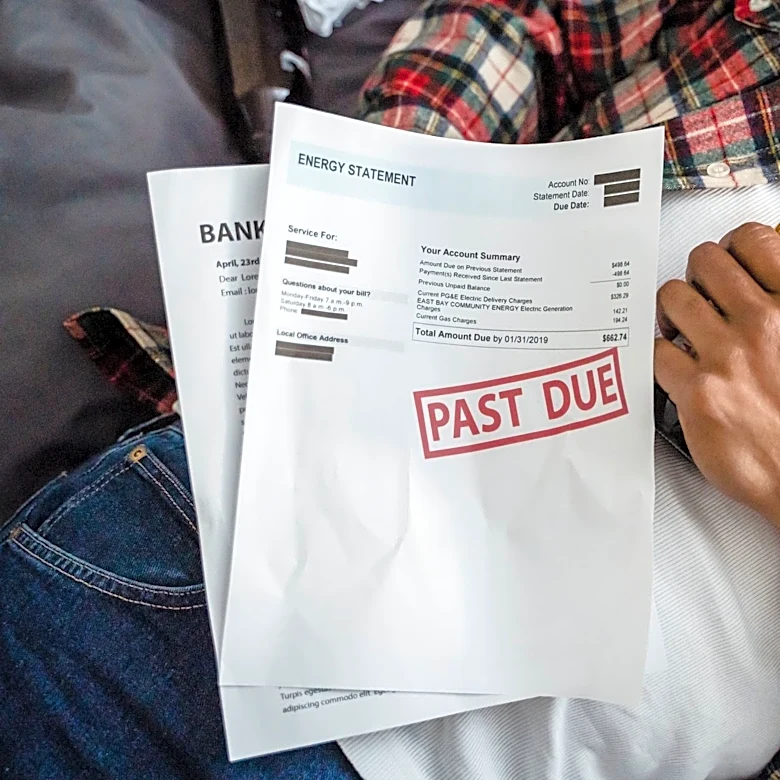
The decline in gas prices is important for American consumers, as it reduces the financial burden of high fuel costs. It also has broader economic implications, potentially boosting consumer confidence and spending. However, the situation remains delicate, with the potential for prices to rise again if supply disruptions occur or if geopolitical tensions resurface. The reopening of the Strait of Hormuz is a positive development, but the global oil market remains vulnerable to changes in supply and demand dynamics.
What's Next?
Attention will now turn to the pace at which oil flows can return to normal levels through the Strait of Hormuz. It is expected to take several months for tanker traffic to fully normalize, and any delays could lead to renewed price volatility. Additionally, the condition of oil facilities in the region and the pace of their recovery will be crucial in determining future supply levels. Stakeholders, including governments and oil companies, will be closely monitoring the situation to manage potential risks and ensure stable energy supplies.