
What's Happening?
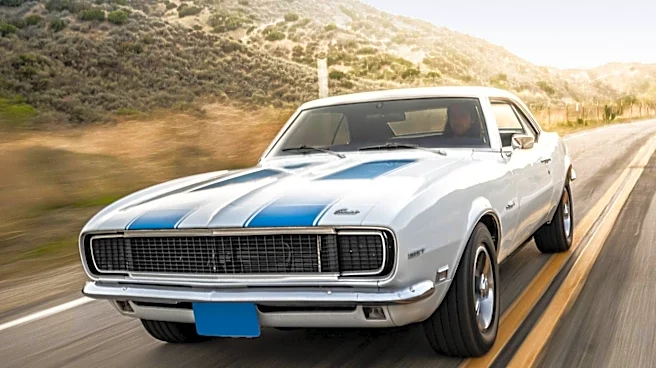
Chris Smith, with his 1970 Camaro, has won the 2026 Optima Ultimate Street Car Invitational (OUSCI). This victory marks the culmination of nine years of development on the vehicle, following his previous campaigns with a 1972 Corvette and a 1967 C10.
Smith's Camaro consistently performs well in the Design & Engineering segment and secured third place in both the road course and autocross events. A key factor in his win was the integration of a sequential gearbox, developed with Haltech, which significantly improved performance, particularly in the Peak Performance Challenge.
Why It's Important?
Smith's win in the OUSCI demonstrates the enduring competitiveness and innovation within the vintage muscle car segment of motorsports. His success challenges previous predictions that all-wheel-drive or modern vehicles would dominate the event, reinforcing the potential for classic cars to achieve top-tier performance through advanced engineering. The use of a sequential gearbox highlights how technological advancements can be integrated into older platforms to enhance their capabilities, influencing trends in custom car building and performance modifications. This victory also showcases the dedication and long-term commitment required to excel in high-level automotive competitions.
What's Next?
Chris Smith's victory is likely to inspire other custom car builders and enthusiasts to explore similar technological upgrades for vintage vehicles. The success of the sequential gearbox in his Camaro may lead to its wider adoption in competitive street car events. The OUSCI will continue to be a platform for showcasing automotive innovation, and future competitions may see an increased focus on balancing classic aesthetics with cutting-edge performance modifications. Smith's achievement also solidifies the 1970 Camaro's legacy as a formidable contender in the street car racing scene.
Beyond the Headlines
This win underscores a broader narrative in the automotive world: the blend of heritage and innovation. It suggests that the appeal of classic cars can be maintained and even enhanced through modern engineering, rather than being solely preserved in their original state. The emphasis on Design & Engineering in the OUSCI also highlights the intellectual and technical prowess involved in custom car building, moving beyond mere speed to encompass comprehensive vehicle development. This trend could influence the aftermarket industry, driving demand for advanced components that can be integrated into older vehicle models.