





What's Happening?
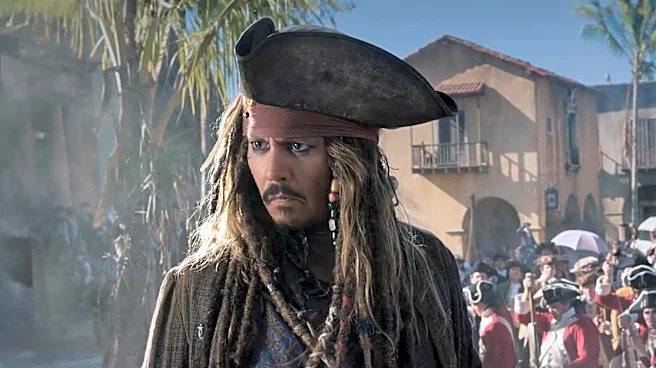
Producer Jerry Bruckheimer has confirmed that discussions are underway with Johnny Depp for his potential return to the 'Pirates of the Caribbean' franchise. This development comes after Depp's previous statement during his 2022 defamation trial against
Amber Heard, where he indicated he would not reprise his role as Captain Jack Sparrow even for a substantial sum and 'a million alpacas,' following Disney's decision to drop him from the series. Bruckheimer's recent comments to Deadline, stating, 'We’re talking with Johnny, we’re working on a screenplay, and hopefully we can get this done,' contradict his earlier remarks in 2022 and 2024, where he suggested the series would be rebooted without Depp. The 'Pirates of the Caribbean' franchise, which began with 'The Curse of the Black Pearl' in 2003, has grossed over $4.5 billion globally across five films, despite a decline in critical reception for later installments. Depp's career has been significantly impacted by his legal issues, including a 2020 libel lawsuit in the UK that characterized him as a 'wife-beater,' leading to his removal from the 'Fantastic Beasts' franchise. However, the 2022 US defamation trial ruled in his favor against Amber Heard.
Why It's Important?
Johnny Depp's potential return to the 'Pirates of the Caribbean' franchise carries significant implications for Hollywood, Disney, and the broader entertainment industry. For Disney, bringing back Depp could be a strategic move to revitalize a highly lucrative franchise that has seen diminishing critical success but still commands substantial box office revenue. His involvement could reignite fan interest and potentially lead to a massive commercial success, recouping some of the franchise's lost luster. However, it also presents a reputational risk, given the controversies surrounding Depp's personal life and legal battles. For Depp, this represents a major step in his Hollywood comeback, offering a high-profile role after a period of sparse acting opportunities. His recent roles, such as Louis XV in 'Jeanne du Barry' and upcoming projects like 'Ebenezer' and 'Day Drinker,' indicate a concerted effort to rebuild his career. The decision to re-engage Depp reflects a potential shift in how studios navigate talent relations in the wake of public controversies, weighing commercial viability against public perception and past legal outcomes. The success or failure of this potential collaboration could set a precedent for other actors facing similar career challenges.
What's Next?
The immediate next step involves the ongoing discussions between Jerry Bruckheimer and Johnny Depp, alongside the development of a screenplay for the sixth 'Pirates of the Caribbean' installment. If an agreement is reached, an official announcement regarding Depp's return would likely follow, generating considerable media attention and fan reaction. The production timeline would then depend on the completion of the script, casting other roles, and scheduling. Disney will need to carefully manage public relations, addressing past controversies and framing Depp's return in a way that appeals to a broad audience. The market will closely watch how audiences respond to Depp's potential comeback, particularly given the mixed reactions to his recent projects. The financial performance of the next 'Pirates' film, should Depp star in it, will be a critical indicator of his renewed box office appeal and the franchise's future trajectory. Furthermore, this situation could influence how other studios approach talent who have faced public scrutiny, potentially leading to more opportunities for actors previously sidelined by controversy.
Beyond the Headlines
Beyond the immediate commercial and career implications, Johnny Depp's potential return to 'Pirates of the Caribbean' touches upon deeper themes concerning cancel culture, redemption, and the power dynamics within Hollywood. The initial decision by Disney to distance itself from Depp reflected a broader industry trend of studios responding to public pressure and legal outcomes. His potential re-hiring, particularly after a favorable legal ruling in the US, could be interpreted as a form of professional redemption, suggesting that public perception and career viability can be restored even after significant controversy. This scenario raises questions about the long-term impact of public trials and media narratives on an individual's career, and whether a 'second chance' is truly possible in the entertainment industry. It also highlights the enduring appeal of established franchises and beloved characters, where the commercial imperative can sometimes outweigh past controversies. The ethical considerations for Disney, balancing potential profits with public sentiment regarding Depp's past, will be under scrutiny. This development could also spark renewed discussions about the role of celebrity culture and the influence of fan bases in shaping casting decisions and career trajectories.