








What's Happening?
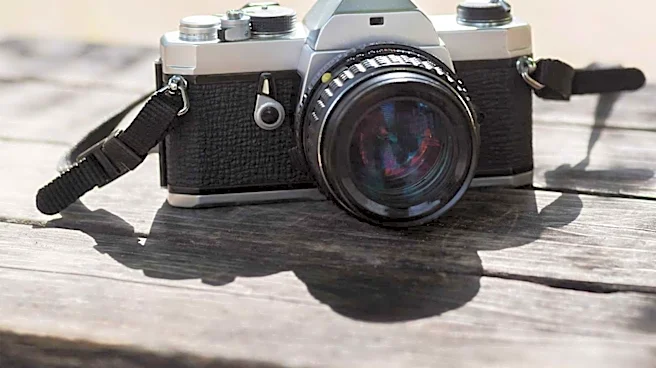
The Pentax K1000, a film camera produced for over two decades until 1997, continues to be highly regarded for its straightforward design and robust construction. Originally intended as an affordable and durable option, it became a staple in art schools
and photography programs due to its manual operation, which forces photographers to master fundamental exposure concepts. The camera features only three main controls: shutter speed, aperture, and focus, lacking modern automated modes. Its mechanical shutter operates without a battery, which is only required for its CdS light meter. The K1000's enduring appeal is also attributed to its compatible K-mount lenses, particularly the SMC Pentax-M series, known for their optical quality and affordability. Despite its age, many K1000 bodies remain functional, though common maintenance issues like foam deterioration in the mirror bumper and light seals often require attention.
Why It's Important?
The continued relevance of the Pentax K1000 highlights a significant trend in photography education and practice: the value of foundational skills over technological automation. In an era dominated by advanced digital cameras, the K1000 serves as a critical teaching tool, compelling users to understand the interplay of light, aperture, and shutter speed without relying on complex algorithms. This approach fosters a deeper, more intuitive understanding of photography, which can translate to improved skills even when using modern equipment. For the U.S. photography community, this means that accessible and mechanically simple tools can still play a vital role in training new generations of photographers, ensuring that core principles are not lost amidst technological advancements. It also underscores the longevity and repairability of older mechanical devices compared to the often disposable nature of contemporary electronics, offering a sustainable alternative for enthusiasts and students.
What's Next?
The Pentax K1000 is expected to maintain its status as a valuable educational and practical tool for photographers seeking to refine their craft. Its affordability and mechanical nature suggest it will continue to be a popular choice for students and those looking to 'recalibrate' their exposure instincts. The market for used K1000s and compatible K-mount lenses is likely to remain active, supported by reputable dealers and a community of enthusiasts who appreciate its simplicity and durability. As digital photography continues to evolve, the K1000's role as a counterpoint, emphasizing manual control and deliberate image-making, will likely grow. Repair services for classic mechanical cameras will also remain important, ensuring these cameras can be maintained and used for decades to come, further solidifying their place in photographic education and practice.
Beyond the Headlines
The enduring popularity of the Pentax K1000 reflects a broader cultural appreciation for simplicity, craftsmanship, and the mastery of fundamental skills in an increasingly complex world. In an age where technology often seeks to automate and simplify tasks, the K1000 stands as a testament to the value of intentionality and direct engagement with a craft. This extends beyond photography, touching upon a desire for tangible, repairable goods and a rejection of planned obsolescence. The camera's ability to force photographers to make conscious decisions about exposure and composition cultivates a unique form of visual literacy and critical thinking. This philosophical approach to learning and creating, championed by the K1000, suggests a deeper societal yearning for authenticity and a return to basics, influencing educational methodologies and consumer preferences across various fields.