






What's Happening?
Applied Materials, a leading supplier of chipmaking equipment, anticipates a more than 30% increase in global spending on chipmaking equipment in 2027. This projection was shared by company executives, including CEO Gary Dickerson, who stated that 2027 is expected
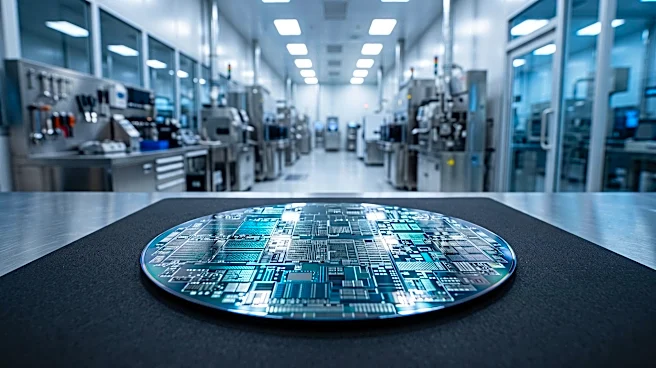
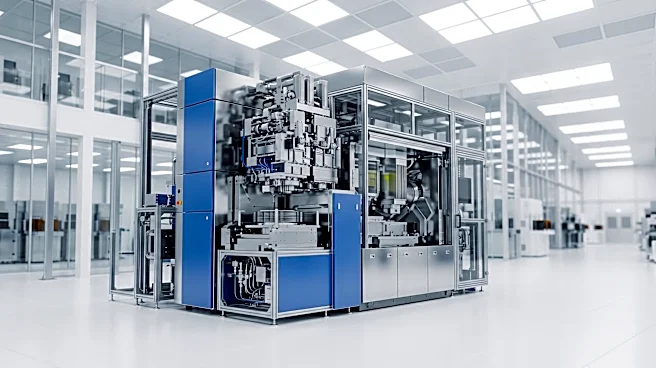
to be another record year for both the equipment market and Applied Materials. The primary constraint on this growth, according to the company, will be the availability of cleanroom space in chip manufacturing plants. Brice Hill, the chief financial officer, noted that factories producing leading-edge logic chips and DRAM memory are currently operating at full capacity, and cleanroom availability will dictate the industry's capacity for new equipment. Applied Materials is tracking over 20 new fabs and line expansions scheduled to ramp up in 2027. The company's fiscal fourth-quarter revenue reached $10.4 billion, a 53% increase year-over-year, with adjusted profit rising 92% to $4.16 per share. Semiconductor systems sales accounted for $8 billion, while service and spare parts generated a record $1.9 billion. For the current quarter, Applied Materials forecasts approximately $11.1 billion in revenue.
Why It's Important?
This forecast from Applied Materials underscores the intense demand for semiconductor manufacturing capabilities, largely driven by the expansion of artificial intelligence infrastructure. The projected 30% increase in chip-tool spending highlights the significant capital investments being made across the global semiconductor industry, with a direct impact on U.S. equipment manufacturers. The emphasis on cleanroom space as the limiting factor reveals a critical bottleneck in scaling chip production, which could affect the availability and cost of various electronic devices, from AI servers to consumer electronics. For the U.S. economy, this sustained demand translates into job creation, technological leadership, and increased revenue for companies like Applied Materials. However, it also points to potential supply chain vulnerabilities if cleanroom construction and expansion cannot keep pace. The strong performance of Applied Materials, with record revenue and profit, indicates a robust market for advanced manufacturing tools, which is essential for maintaining the U.S.'s competitive edge in high-tech industries. The demand for advanced packaging, DRAM, and leading-edge foundry logic, which constitute over 85% of the silicon cost in AI data centers, suggests these segments will experience accelerated growth.
What's Next?
Applied Materials is actively working to keep pace with demand, planning to double its system production capacity by 2028 and more than double its factory and lab sizes by 2030. This expansion aims to address a range of demand scenarios and ensure continuous output increases. Customers are reportedly pressing for earlier shipments, with major buyers providing eight-quarter forecasts and placing orders sooner, indicating a long-term commitment to capacity expansion. The company expects spending in China to continue rising, albeit at a slower rate than in AI-driven markets, potentially falling below 25% of Applied Materials' business in 2027. The availability of cleanroom space will remain a critical determinant of how much new equipment the industry can absorb. The ongoing investments in new fabs and line expansions, particularly in the U.S. and other regions, will be crucial for alleviating supply constraints and meeting the escalating global demand for semiconductors. The industry will need to closely monitor the progress of these construction projects and the ramp-up of new facilities.
Beyond the Headlines
The challenge of cleanroom availability extends beyond mere construction; it involves highly specialized infrastructure, stringent environmental controls, and a skilled workforce, all of which require substantial investment and time to develop. This bottleneck could lead to strategic shifts in how semiconductor companies plan their expansions, potentially favoring regions with established infrastructure or those offering significant incentives for new construction. The intense demand for chipmaking equipment also raises questions about the long-term sustainability of such rapid growth and the potential for cyclical downturns, a historical characteristic of the semiconductor industry. Furthermore, the U.S.-China technology trade dynamics, including export controls on advanced semiconductors, continue to influence market dynamics and investment decisions. The push for domestic chip manufacturing, supported by initiatives like the CHIPS Act, becomes even more critical in this context, aiming to reduce reliance on foreign supply chains and bolster national security. The ethical implications of AI's rapid development, which is driving much of this demand, also warrant consideration, particularly concerning data privacy, algorithmic bias, and the responsible deployment of advanced technologies.