





What's Happening?
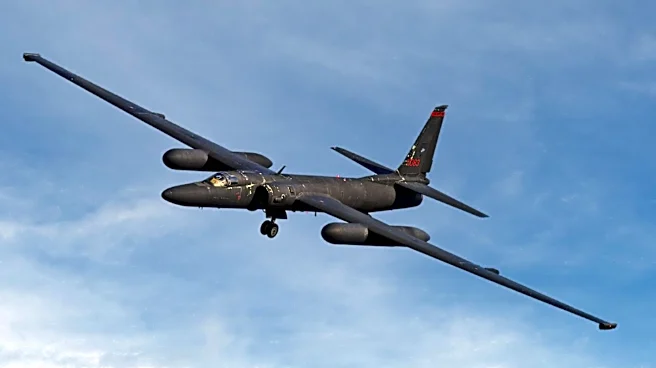
Lockheed Martin and the U.S. Air Force Test Pilot School have successfully conducted a series of flight tests where an AI agent autonomously flew a fighter aircraft, the X-62A, using live sensor data to intercept another aircraft. This marks a significant
advancement in airborne autonomy, as the AI processed real-time data from operational sensors to make tactical decisions during flight. The tests involved 27 autonomous intercepts across eight sorties, utilizing the X-62A Variable In-flight Simulation Test Aircraft, also known as VISTA. The AI's ability to process infrared search and track data and execute combat-relevant maneuvers in real-time demonstrates a major step towards integrating AI into air combat systems.
Why It's Important?
The successful demonstration of AI in autonomous flight operations represents a pivotal development in military aviation, potentially transforming air combat capabilities. By reducing pilot workload and allowing AI to handle time-sensitive tasks, aircrews can focus more on strategic decision-making. This advancement could lead to more efficient and effective military operations, enhancing the U.S. military's competitive edge. The integration of AI in combat systems also reflects broader trends in defense technology, where automation and advanced computing are increasingly critical.
What's Next?
The U.S. Air Force and Lockheed Martin plan to continue developing the X-62A's capabilities, with future upgrades aimed at tighter integration between sensors, combat systems, and AI agents. These developments will likely influence future military strategies and procurement decisions. As AI technology matures, its role in military operations is expected to expand, potentially leading to new doctrines and operational concepts. Stakeholders, including defense policymakers and military leaders, will closely monitor these advancements to assess their implications for national security.