
What's Happening?
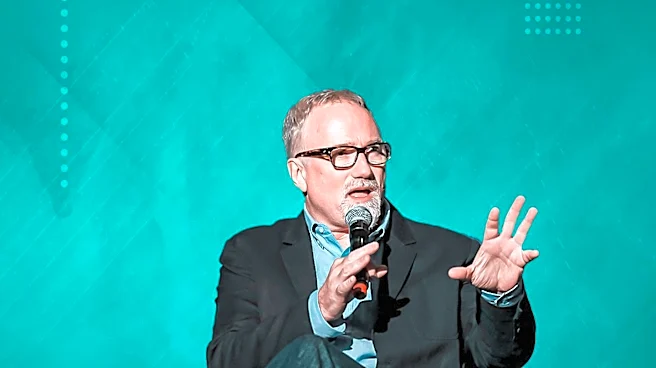
Director and executive producer David Fincher has confirmed that a third season of the Netflix crime thriller 'Mindhunter' is unlikely due to its high production costs and relatively small audience. During
an interview on the 'Happy Sad Confused' podcast, Fincher revealed that Netflix informed him the show, while loved by two million subscribers, cost $100 million per season. Netflix reportedly sought to broaden the audience by suggesting changes, such as incorporating more action sequences with guns, akin to 'CSI: Crime Scene Investigation.' Fincher rejected these suggestions, stating they were not aligned with the show's nature. His multiyear exclusive deal with Netflix is set to expire in 2027, with no indications of renewal, further diminishing prospects for the series. Fincher also noted that production costs and salaries typically increase significantly by a show's third season, presenting another hurdle for 'Mindhunter.'
Why It's Important?
This development highlights the evolving economics of streaming content and the tension between creative vision and commercial viability within major platforms like Netflix. For creators, it underscores the challenge of producing niche, high-quality content that may not attract the massive subscriber numbers required to justify substantial budgets. For viewers, it means that critically acclaimed shows with dedicated but smaller fan bases are vulnerable to cancellation, even if they are highly regarded. This situation could influence future commissioning decisions at Netflix and other streaming services, potentially favoring broader appeal over artistic specificity, especially for expensive productions. The emphasis on audience size and cost-effectiveness could lead to a more homogenized content landscape, impacting the diversity of shows available to subscribers.
What's Next?
With David Fincher's exclusive deal with Netflix expiring in 2027 and no signs of renewal, the likelihood of 'Mindhunter' Season 3 is extremely low. Fans of the series will likely need to accept that the show has concluded. This situation may prompt other filmmakers and showrunners to re-evaluate their strategies when pitching projects to streaming platforms, particularly regarding budget expectations versus projected audience reach. Netflix, in turn, may continue to prioritize content that demonstrates a clear path to attracting and retaining a large subscriber base, potentially leading to more data-driven commissioning decisions. The broader industry might see a continued trend of high-budget, niche shows struggling to secure renewals unless they achieve breakout success.
Beyond the Headlines
The 'Mindhunter' situation reflects a broader industry shift where streaming services, initially focused on subscriber growth through diverse content, are now scrutinizing profitability and return on investment more closely. This could lead to a more conservative approach to greenlighting projects, especially those with high production values and limited mass appeal. The creative tension between Fincher's artistic integrity and Netflix's desire for broader audience engagement also raises questions about the future of auteur-driven content in the streaming era. It suggests that even established, acclaimed directors may face pressure to adapt their vision to commercial demands. This trend could impact the types of stories told and the creative risks taken in television production, potentially leading to fewer experimental or intellectually demanding series in favor of more formulaic, widely accessible content.