







What's Happening?
The Exploration Company, a German-based space transportation firm, has launched a U.S. entity named TEC Federal to compete for government contracts. This strategic move includes the opening of a Rapid Innovation Lab in Houston, Texas, near NASA's Johnson
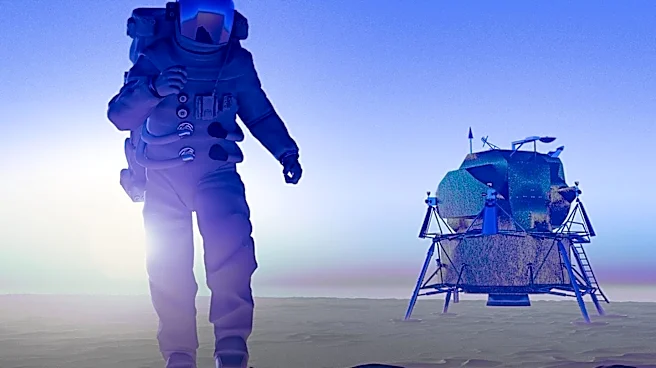
Space Center. The lab will facilitate engineering and testing capabilities necessary for U.S. government contracts. The company is developing the Nyx capsule, a reusable spacecraft, with plans for a 2028 orbital flight test to deliver cargo to the International Space Station. Initial development of the Nyx capsule is funded by the European Space Agency's LEO Cargo Return initiative, with potential additional funding of 200 million euros for further development.
Why It's Important?
The establishment of TEC Federal and the Houston lab positions The Exploration Company to tap into the lucrative U.S. government space contracts market. This move aligns with the growing demand for cargo and crew capabilities in low Earth orbit, especially as space agencies prepare for a future beyond the International Space Station. By situating itself near NASA, the company gains access to a wealth of expertise and potential collaborations, enhancing its competitive edge in the space industry. The potential funding from the European Space Agency further underscores the strategic importance of this expansion, as it could significantly bolster the company's financial and technological resources.
What's Next?
The Exploration Company is poised to advance its Nyx capsule development, with a focus on securing additional funding and partnerships. The upcoming decision by the European Space Agency on Phase 2 funding will be crucial for the company's demonstration mission. Meanwhile, the Houston lab will likely become a hub for innovation and collaboration, potentially attracting talent and partnerships from the U.S. space sector. The company's proximity to NASA could facilitate future contracts and collaborations, further integrating it into the U.S. space industry landscape.