


What's Happening?
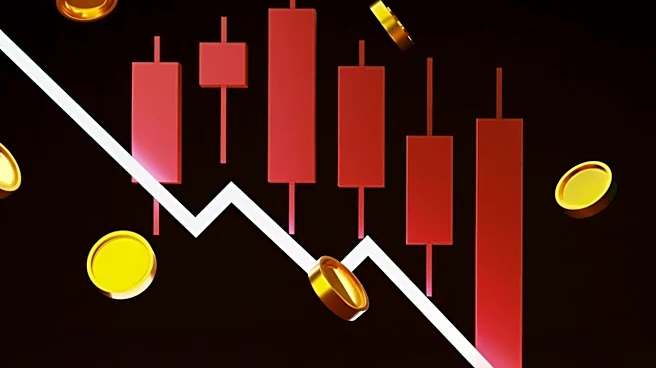
Banco Santander (BME:SAN) has recently seen a decline in its share price, with a 13.78% drop over the past 30 days and a 17.77% decrease over the last 90 days. This short-term downturn follows the publication of its financial results for the first nine
months of 2026, which, despite an increase in underlying net profit, contained several negative signals that disappointed investors and led to a significant sell-off. The bank's recent sponsorship of NFTE's 2026 World Youth Entrepreneurship Challenge aimed to highlight its commitment to financial inclusion and skills building, providing another perspective on its global operations. Despite the recent dip, the bank boasts strong long-term gains, with a 1-year total shareholder return of 19.51% and a 5-year total shareholder return of 328.22%. Analysts suggest the stock is currently undervalued, with a fair value estimated at €14.37 against a last close of €10.32, implying a potential upside.
Why It's Important?
The mixed performance of Banco Santander's stock is significant for U.S. investors and the broader financial market, particularly given the bank's strong presence in the U.S. The short-term decline, despite long-term growth, highlights the volatility inherent in the banking sector and how investor sentiment can be swayed by immediate financial results, even when underlying profits improve. The narrative of undervaluation, with a fair value significantly higher than the current market price, presents a potential opportunity for investors seeking long-term growth. However, this opportunity is tempered by risks such as unexpected credit losses or political and currency instability in key markets like Brazil, which could quickly unravel the fair value assessment. This situation underscores the importance of comprehensive due diligence for investors, weighing both the immediate market reactions and the fundamental long-term prospects of a company.
What's Next?
The immediate future for Banco Santander will likely involve close monitoring of its financial performance and market sentiment. Investors will be watching for any further developments regarding credit losses and the economic stability of its international markets, particularly Brazil. The current undervaluation narrative suggests that the stock could see a rebound if these risks are mitigated or if the market re-evaluates its long-term potential. The bank's continued engagement in initiatives like the NFTE World Youth Entrepreneurship Challenge may also play a role in shaping its public image and investor confidence. For potential investors, the question remains whether the current valuation offers sufficient upside to justify the associated risks, prompting a need for careful analysis of both the positive and negative signals surrounding the bank.
Beyond the Headlines
The situation with Banco Santander extends beyond mere stock fluctuations, touching upon broader themes within the global banking industry. The emphasis on financial inclusion and skills building through sponsorships like the NFTE challenge reflects a growing trend among financial institutions to integrate social responsibility into their business models. This approach can enhance brand reputation and potentially attract a new generation of customers, contributing to long-term sustainability. However, the vulnerability of the bank's valuation to external factors like political and currency shocks in emerging markets underscores the interconnectedness of the global economy and the inherent risks of international banking. This highlights the complex interplay between financial performance, geopolitical stability, and corporate social responsibility in shaping the trajectory of major financial institutions.