





What's Happening?
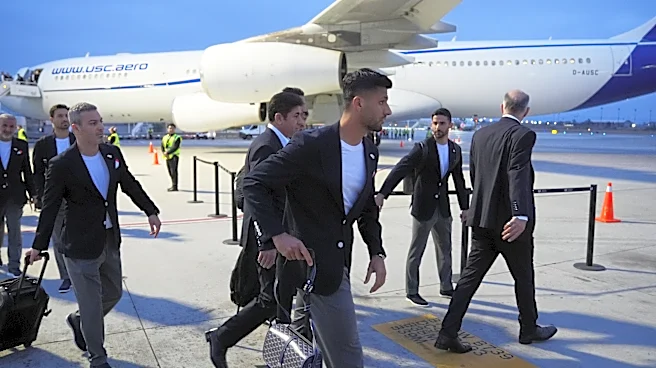
The 2026 FIFA World Cup has highlighted the significant role of diaspora communities in international football, with nearly a quarter of players representing countries other than their birth nations. Dennis Dargahi's journey to join Iran's national team
exemplifies this trend. Born in Germany, Dargahi secured Iranian citizenship through a complex process involving DNA tests and a name change, influenced by his famous aunt's social media post. His story underscores the diverse pathways players take to represent countries, reflecting broader themes of identity and belonging in global sports.
Why It's Important?
Dargahi's story illustrates the growing impact of globalization and migration on international sports. The ability of players to represent countries based on ancestry or naturalization broadens the talent pool and enriches the cultural diversity of teams. This trend can enhance the competitive nature of international tournaments and foster greater cultural exchange and understanding. However, it also raises questions about national identity and the criteria for representing a country, prompting discussions about the balance between heritage and nationality in sports.