








What's Happening?
Herlander Zola dos Santos, President of Stellantis for South America, has issued a warning regarding the potential threat to the region's automotive supply chain posed by the increasing prevalence of cars partially assembled in China. Speaking at a press
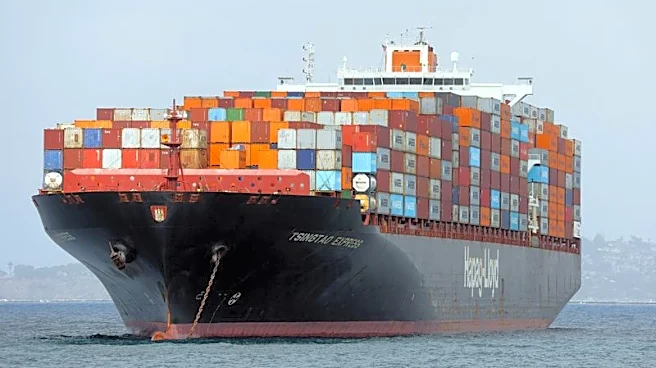
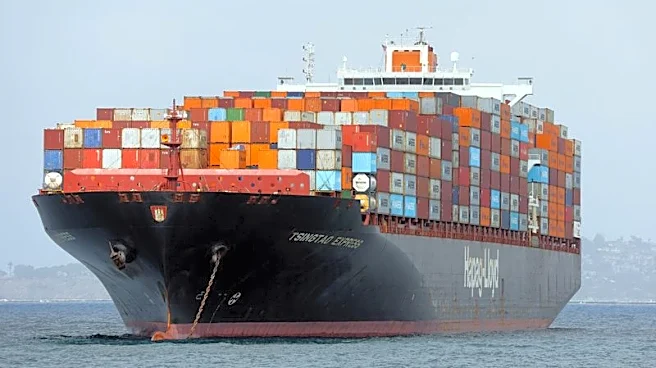
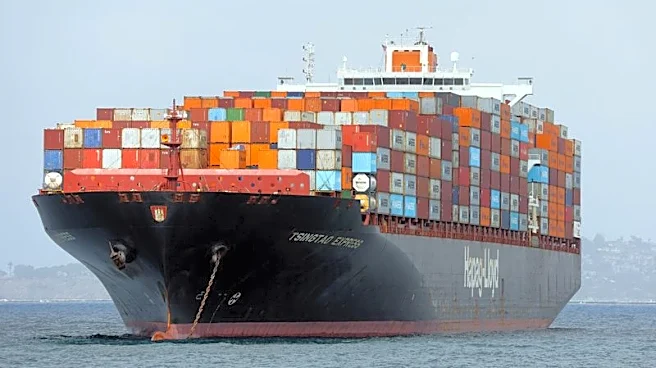
event in São Paulo, Zola stated that if the business model in South America were to shift entirely to importing vehicles as completely knocked-down (CKD) or semi-knocked-down (SKD) kits, Stellantis would only require approximately 10% of its current 35,000-strong workforce in the region. This implies a potential loss of around 31,500 jobs. Zola highlighted that current regulations inadvertently incentivize producing cars in China, disassembling them, and then reassembling them in South America. Chinese carmakers like BYD and Great Wall Motor Co., Ltd. (GWM) have already established plants in Brazil that operate on this model, gaining significant market share.
Why It's Important?
This warning from Stellantis underscores a critical economic and social challenge for South American nations, particularly Brazil, where the automotive industry is a significant employer. The potential loss of 31,500 jobs at Stellantis alone would have a substantial negative impact on local economies, leading to widespread unemployment and reduced consumer spending. For the U.S. automotive industry, this situation highlights the global competitive pressures and the strategic decisions companies like Stellantis face regarding manufacturing locations and supply chain optimization. While the immediate impact is on South America, a shift towards kit imports could set a precedent or influence trade policies that might eventually affect manufacturing and employment in other regions, including the U.S., if similar economic incentives or competitive pressures arise. It also brings to light the broader implications of China's growing influence in the global automotive market and its impact on established manufacturing hubs.
What's Next?
Stellantis, through its regional chief, has indicated that it might consider importing kits itself if it proves to be the most competitive option, potentially leveraging its partnerships with Chinese companies like Leapmotor and Dongfeng Automobile Co., Ltd. This suggests a potential strategic pivot for Stellantis in South America, moving away from full-scale local manufacturing towards a more assembly-focused operation. Such a move would likely intensify the debate around trade policies, local content requirements, and job protection in the region. Governments in South America may face pressure to re-evaluate existing regulations and incentives to protect local manufacturing and employment. The actions of Chinese automakers in the region will continue to be a key factor, as their success with the kit-import model could further accelerate this trend, forcing other established players to adapt or risk losing market share.
Beyond the Headlines
The situation described by Stellantis reveals a deeper tension between globalized manufacturing efficiencies and the preservation of local industrial bases and employment. The 'kit-only' model, while potentially offering cost advantages and faster market entry for some, fundamentally alters the nature of automotive production in host countries, reducing the need for skilled labor in complex manufacturing processes. This could lead to a de-industrialization of certain sectors in South American economies, shifting them from producers to assemblers. Ethically, companies face a dilemma between maximizing profitability through global supply chain optimization and their social responsibility to maintain local employment. This scenario also highlights the strategic importance of trade agreements and industrial policies in shaping the future of manufacturing and employment in a globally interconnected economy, potentially leading to calls for protectionist measures or revised trade frameworks to safeguard domestic industries.