








What's Happening?
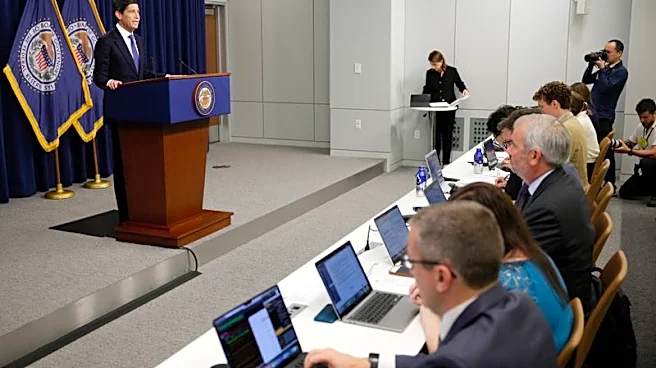
Federal Reserve Vice Chair for Supervision Michelle Bowman has previewed upcoming changes to U.S. stress tests during a speech in London. These reforms aim to enhance transparency and reduce volatility within the stress testing framework, culminating
years of effort. The proposed changes include subjecting stress test models and scenarios to public comment and averaging a bank's two most recent stress test results to reduce capital requirement volatility. Bowman also discussed an 'expanded approach' to stress testing, which would identify firm-specific vulnerabilities under various economic and financial scenarios without directly setting capital requirements. Additionally, Bowman shared initial findings from the Federal Reserve's independent review into the failure of Silicon Valley Bank (SVB). The review, conducted by Starling Advisory Group, found that SVB's failure resulted from vulnerabilities such as unrealized losses on its securities portfolio, a concentrated deposit base, and a lack of readiness to borrow from the discount window. Supervisory staff were aware of these vulnerabilities as early as March 2022 but failed to take prompt action, partly due to a culture of risk aversion and uncertainty regarding 'decision rights.' The report clarified that social media did not fuel the run on SVB.
Why It's Important?
These reforms to the U.S. stress testing framework are significant for the stability and predictability of the financial system. By increasing transparency and reducing volatility, the Federal Reserve aims to create a more robust regulatory environment that better promotes financial stability and ensures the safety and soundness of large banks. The 'expanded approach' to stress testing, which focuses on identifying firm-specific vulnerabilities early, could prevent future bank failures by encouraging proactive risk management. The findings from the Silicon Valley Bank review are crucial as they highlight systemic issues within the supervisory process, particularly the delays in taking decisive action despite early identification of vulnerabilities. This review underscores the need for supervisors to act promptly and decisively when material vulnerabilities are identified, ensuring accountability and preventing similar crises. The clarification that social media did not cause the SVB run is important for dispelling misinformation and focusing on the underlying financial and supervisory failures.
What's Next?
Vice Chair Bowman indicated that two final rules regarding stress test reforms are forthcoming. One rule will subject stress test models and scenarios to public comment, while the other will aim to reduce volatility in capital requirements by averaging the results of a bank's two most recent stress tests. Bowman also plans to recommend considering a third proposal to revise the 2027 stress test models, specifically seeking comment on a revised model for noninterest income to better capture business diversity. A liquidity proposal is expected to be issued in the fall. These steps suggest a continued push towards a more transparent and predictable regulatory framework. The Federal Reserve will likely implement measures to address the supervisory shortcomings identified in the SVB review, potentially leading to changes in internal protocols and decision-making processes for bank supervision. The focus will be on ensuring supervisors are empowered and willing to act promptly when vulnerabilities are detected.
Beyond the Headlines
The Federal Reserve's proactive stance on stress test reforms and its candid review of the Silicon Valley Bank failure signal a broader commitment to learning from past mistakes and strengthening the financial system. The emphasis on transparency and public comment in stress testing reflects a move towards greater accountability and stakeholder engagement in regulatory processes. The acknowledgment of a 'longstanding culture of risk aversion and uncertainty on decision rights' within supervisory staff at the Federal Reserve is a critical insight. This suggests that beyond technical regulatory adjustments, there's a need for cultural and organizational shifts within regulatory bodies to foster a more assertive and responsive supervisory approach. This internal introspection could lead to more effective oversight, ultimately enhancing public trust in the banking system and mitigating the risk of future financial instability. The ongoing efforts to refine stress tests and supervisory practices will have long-term implications for how banks manage risk and how regulators ensure systemic stability.