






What's Happening?
IFI Lighting, an Athens-based architectural lighting studio established in 1989, is redefining how architecture is experienced by treating light as an invisible building block. The studio, led by creative director George Anagnostakis and managing director Nickolas
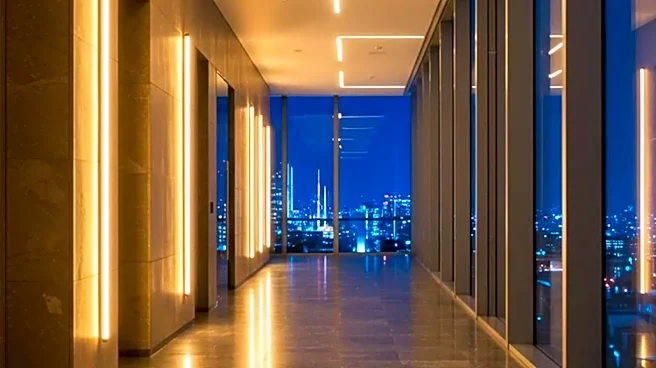
Anagnostakis, approaches each project as a collaborative co-author from the initial structural sketches. They meticulously study site topography, orientation, and tactile materials to integrate conceptual atmosphere into physical reality. Through surface interaction studies and real-scale testing, IFI Lighting reveals how illumination interacts with diverse textures, combining precise technical calculations with atmospheric experimentation. Their method involves measured modulations between deep shadow and soft luminescence, allowing a single volume to exhibit shifting moods throughout the day. Fixtures are designed to dissolve into structural details, emphasizing the pure interaction between light and space. This approach prioritizes natural daylight, low-energy optical systems, and glare control to curb light pollution, transforming environmental responsibility into an architectural virtue that respects natural cycles.
Why It's Important?
IFI Lighting's approach to architectural illumination holds significant importance for the U.S. design and construction industries, particularly in the realm of sustainable and human-centric design. By integrating lighting from the earliest stages of architectural planning, the studio demonstrates a model that can lead to more energy-efficient buildings and reduced light pollution, aligning with growing environmental regulations and consumer demand for sustainable practices in the U.S. Their focus on how light sculpts human senses and influences perception can enhance the user experience in commercial, residential, and public spaces, potentially increasing property value and user satisfaction. This methodology could inspire U.S. architects and lighting designers to adopt more holistic and integrated design processes, moving beyond mere functional lighting to create spaces that evoke specific moods and enhance well-being. The emphasis on 'darkness as an active medium' also challenges conventional lighting design, promoting a more nuanced understanding of light's role in creating intimate and calming environments, which could influence urban planning and architectural trends across the U.S.
Beyond the Headlines
The philosophy championed by IFI Lighting extends beyond mere aesthetics, touching upon deeper ethical and cultural dimensions within architecture. By prioritizing natural cycles and minimizing light pollution, the studio implicitly advocates for a more harmonious relationship between human-made structures and the natural environment. This perspective challenges the prevalent 'more is better' mentality often seen in urban lighting, suggesting that restraint and thoughtful integration can lead to more profound and sustainable outcomes. Culturally, this approach could foster a greater appreciation for the subtle interplay of light and shadow, moving away from uniformly lit environments towards spaces that engage the senses more deeply. Legally, as environmental concerns grow, such integrated and sustainable lighting practices could become benchmarks for future building codes and urban development regulations in the U.S., particularly in areas sensitive to ecological impact or seeking to preserve dark skies. The emphasis on human perception also highlights the psychological impact of design, suggesting that well-conceived lighting can contribute to mental well-being and a sense of place.