




What's Happening?
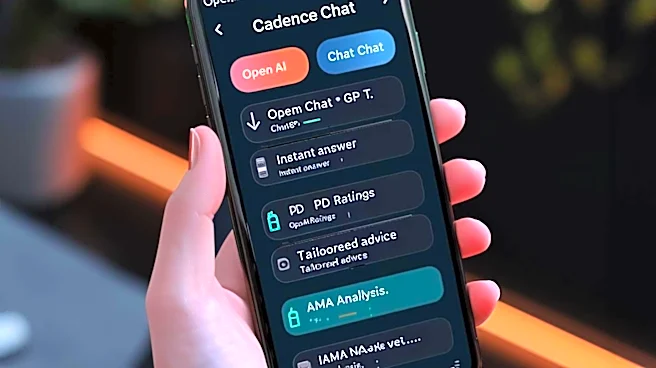
Couples are increasingly utilizing AI agents, such as Instinct, to manage shared tasks and reduce emotional labor within their relationships. This trend follows the launch of Instinct's 'Trusted Person' feature, which allows AI agents of different users
to communicate directly to coordinate activities like planning events, scheduling appointments, and managing to-do lists. While some users, like entrepreneur Alex Borkin, find these AI tools helpful for streamlining 'boring tasks' and reducing the need for constant reminders to their partners, the adoption of AI in this intimate context is also leading to new challenges. These include privacy concerns, accidental disclosure of surprises, and a potential shift in the dynamics of emotional responsibility within relationships. The technology aims to alleviate the cognitive and emotional burden often disproportionately carried by women in heterosexual relationships.
Why It's Important?
The integration of AI agents into personal relationships has significant implications for how couples manage their daily lives and emotional responsibilities. While these tools offer the promise of increased efficiency and reduced friction over mundane tasks, they also introduce complexities regarding privacy, data security, and the fundamental nature of relational work. The potential for AI to handle tasks traditionally associated with emotional labor could redefine expectations within partnerships, potentially leading to a decrease in direct communication and shared problem-solving. This shift could impact the development of relational skills and the perceived value of mutual effort in a partnership. Furthermore, the reliance on AI for coordination raises questions about who ultimately bears the responsibility for oversight and the potential for new forms of disagreement when AI agents falter.
What's Next?
As AI agents become more sophisticated and integrated into daily life, their role in managing personal and relational tasks is likely to expand. Developers will need to address privacy and security concerns to build user trust, especially as these agents require access to sensitive personal information. Couples will face the ongoing challenge of balancing the convenience offered by AI with the need to maintain genuine emotional connection and shared responsibility. Therapists and relationship experts may increasingly need to guide couples on how to effectively use these tools without undermining the essential human elements of their relationships. The evolution of AI in this space will likely prompt further discussions about the boundaries of technology in personal life and the definition of emotional labor in modern partnerships.
Beyond the Headlines
The use of AI agents in relationships delves into deeper ethical and psychological dimensions. It raises questions about the authenticity of gestures and efforts when mediated by technology. If an AI agent plans a surprise or manages household logistics, does it diminish the emotional impact or the sense of being 'seen' by a partner? This trend could inadvertently foster 'weaponized incompetence' by providing an easy workaround for partners who avoid certain tasks, rather than encouraging them to develop those skills or share the burden. The long-term societal impact could include a re-evaluation of what constitutes 'work' in a relationship and how technology shapes our capacity for empathy, communication, and shared growth. The potential for AI to become a 'relational scar tissue' in itself, creating new points of contention rather than resolving old ones, is a critical consideration.