

What's Happening?
Monique Valeris, Good Housekeeping Home Design Director, is providing simple strategies to eliminate kitchen clutter and prevent unnecessary spending. With school back in session and holidays approaching, kitchens often become cluttered. Valeris emphasizes
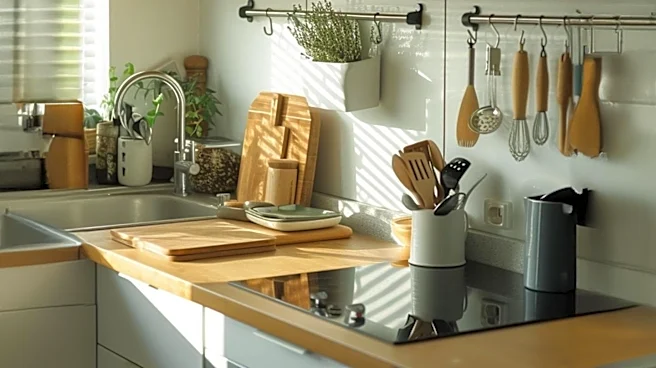
that getting organized doesn't necessarily require buying numerous new containers. Instead, she recommends starting by identifying and prioritizing frequently used kitchen items. For example, she suggests keeping essential cooking utensils in a countertop crock for easy access, rather than hidden in a drawer. Valeris also advocates for repurposing existing household items, such as using a vase as a utensil holder or a wine rack to organize water bottles, to free up drawer space without additional purchases. She advises that organizers should only be bought when they genuinely streamline a space, are effective, and save time, such as clear bins for refrigerator organization to easily take inventory.
Why It's Important?
These strategies are significant for U.S. households grappling with kitchen clutter and budget constraints. Valeris's advice challenges the common consumer tendency to immediately purchase organizing products, which often leads to more clutter and wasted money. By promoting decluttering, repurposing, and thoughtful purchasing, she empowers individuals to create more functional and less stressful kitchen environments without significant financial outlay. This approach can help families better manage their resources, reduce waste, and improve daily efficiency. For the retail sector, this guidance might encourage a shift towards more sustainable and multi-functional products, or a greater emphasis on educational content that supports mindful consumption. Ultimately, it contributes to a broader movement towards practical, accessible, and economically sensible home organization.
What's Next?
Consumers are encouraged to implement Valeris's strategies by first assessing their kitchen items, identifying what they use most, and then looking for ways to repurpose items they already own. This includes decluttering expired pantry items, duplicate tools, and worn-out food storage containers. The next step involves strategically purchasing organizers only when they serve a specific, identified need, such as clear bins for refrigerator inventory. Good Housekeeping and similar platforms will likely continue to share practical, budget-friendly organization tips, potentially expanding to other areas of the home. This focus on mindful consumption and repurposing could influence product development in the home goods market, leading to more versatile and durable organizing solutions. The goal is to foster a more sustainable and efficient approach to home management.
Beyond the Headlines
The emphasis on decluttering and repurposing before buying new organizing products reflects a growing awareness of consumerism's impact on both personal finances and the environment. In a society often driven by the acquisition of new goods, Valeris's advice promotes a more conscious and sustainable lifestyle. It encourages individuals to critically evaluate their possessions and consider the environmental footprint of their purchasing decisions. This shift can lead to a reduction in household waste and a greater appreciation for existing resources. Furthermore, the psychological benefits of a decluttered and organized kitchen extend beyond mere aesthetics; it can reduce daily stress, improve meal preparation efficiency, and foster a greater sense of control and well-being within the home. This approach aligns with broader trends towards minimalism and sustainable living, advocating for thoughtful consumption over impulsive buying.