








What's Happening?
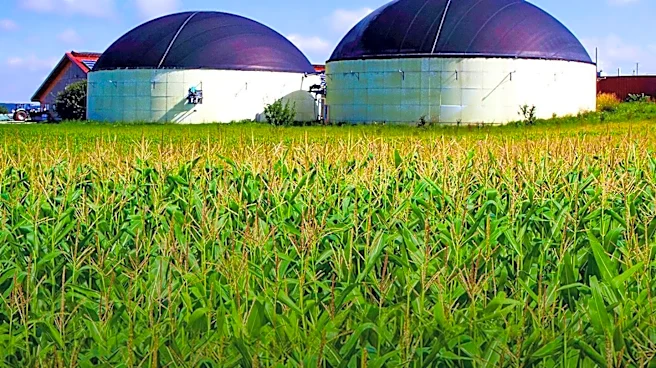
A new study by S&P Global Energy, commissioned by U.S. Farmers and Ranchers in Action, emphasizes the transformative potential of biofuels for American agriculture. The report, titled 'Fueling Agriculture: Biofuels as the Catalyst,' outlines how increased
biofuel demand could revitalize rural economies and enhance global food and energy security. The study identifies three main challenges facing agriculture: stagnating global food demand, productivity outpacing demand, and declining biofuel demand due to improved vehicle efficiency and electrification. It suggests that expanding biofuel markets could reverse these trends by creating sustained demand, encouraging modern farming practices, and stabilizing farm incomes. The report projects that global biofuel production could triple by 2050, driven by agricultural technology and innovation, capturing a larger share of the global liquid fuel market.
Why It's Important?
The findings of this study are significant for the U.S. agricultural sector and rural communities. By expanding biofuel markets, farmers could see increased demand for their crops, which would justify investments in productivity improvements and advanced technologies. This could lead to higher corn yields and more stable farm incomes, preserving farmland and supporting rural economies. The study also highlights the potential for biofuels to enhance global food security by increasing food and feed supplies. For the U.S., this means maintaining current levels of corn planting and benefiting various agricultural businesses, from equipment manufacturers to seed companies. The broader adoption of biofuels could also provide consumers with cost-effective fuel options, as ethanol often trades below gasoline prices.
What's Next?
The study suggests that if demand signals for biofuels return, there could be a significant adoption of new technologies in agriculture, leading to increased production efficiency. This would require policy support to optimize biofuel growth scenarios and ensure that the agricultural sector can meet the projected demand. Stakeholders, including policymakers, farmers, and agricultural businesses, may need to collaborate to create favorable conditions for biofuel market expansion. Additionally, the study implies that developing regions could benefit from technology transfer, narrowing yield gaps and improving food security. The U.S. agricultural sector may need to prepare for these shifts by investing in research and development and advocating for supportive policies.
Beyond the Headlines
The study underscores the ethical and economic dimensions of biofuel expansion. By providing a market-driven solution, biofuels could help address the ethical challenge of food security, particularly in developing regions. The potential for biofuels to stabilize rural economies also highlights the socio-economic benefits of sustainable agricultural practices. However, the transition to increased biofuel production must be managed carefully to avoid unintended consequences, such as environmental degradation or resource depletion. The study calls for a balanced approach that considers both the economic and environmental impacts of biofuel expansion.