




What's Happening?
Fall fashion is experiencing a significant resurgence of Y2K and 90s trends, with styles like gaucho pants, plaid, asymmetric hemlines, peplum tops, rich brown color palettes, and layered camis making a comeback. Fashion experts and stylists note that
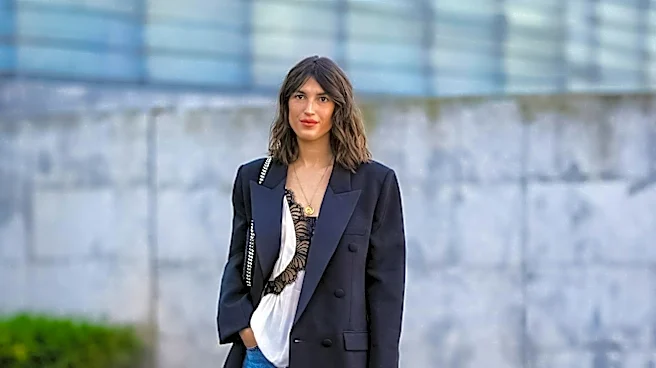
these nostalgic trends are being updated with modern styling to integrate seamlessly into contemporary wardrobes. For instance, gaucho pants, once a staple of the early 2000s, are returning with styling tips that pair them with structured jackets and pointed boots to create a more current look. Similarly, plaid is evolving from its traditional preppy or grunge associations to appear in more tailored and sophisticated pieces like trousers and blazers. Layered camis, a hallmark of Y2K fashion, are also reappearing, with brands now offering two-in-one styles that provide the layered effect without added bulk, making them suitable for cooler weather layering.
Why It's Important?
The return of Y2K and 90s fashion trends signifies a broader cultural embrace of nostalgia within the U.S. consumer market. This trend impacts the retail and fashion industries by driving demand for specific styles and influencing design choices for upcoming collections. Brands are adapting by reintroducing classic silhouettes and updating them for modern appeal, which can lead to increased sales in these categories. For consumers, this means a wider variety of fashion choices that blend comfort with style, as seen with the updated gaucho pants offering the ease of leggings without the tightness. The trend also highlights the cyclical nature of fashion, where past styles are reinterpreted for new generations, creating opportunities for both established brands and emerging designers to innovate within familiar aesthetics. The accessibility of some of these trends, such as zigzag headbands, also makes high-fashion looks attainable for a broader audience, influencing fast fashion and accessory markets.
What's Next?
The continued evolution of these nostalgic trends is expected, with designers likely to further experiment with Y2K and 90s aesthetics, potentially introducing new interpretations or combining them with other emerging styles. Consumers can anticipate more brands offering updated versions of these retro items, focusing on versatility and modern wearability. Social media platforms, particularly TikTok, will continue to play a crucial role in popularizing and disseminating these trends, influencing rapid adoption and adaptation within the fashion community. The emphasis on comfort and individuality, as highlighted by stylists, suggests that future iterations of these trends will prioritize personal expression and practical wear over strict adherence to historical accuracy. This could lead to a more eclectic mix of styles, where elements from different eras are combined to create unique, contemporary looks.
Beyond the Headlines
The resurgence of Y2K and 90s fashion extends beyond mere clothing choices, reflecting deeper societal shifts and cultural sentiments. This trend can be seen as a form of escapism, offering a return to a perceived simpler or more optimistic time, especially for those who grew up during these decades. It also underscores the influence of digital culture and social media in shaping fashion cycles, as trends can be revived and spread globally at an unprecedented pace. The emphasis on 'authenticity' and 'anything-goes energy' in styling these retro looks suggests a move away from overly curated or 'flawless' aesthetics, favoring a more genuine and playful approach to personal style. This cultural shift could encourage greater individuality and self-expression in fashion, challenging traditional norms and promoting a more diverse range of acceptable styles in everyday wear.