



What's Happening?
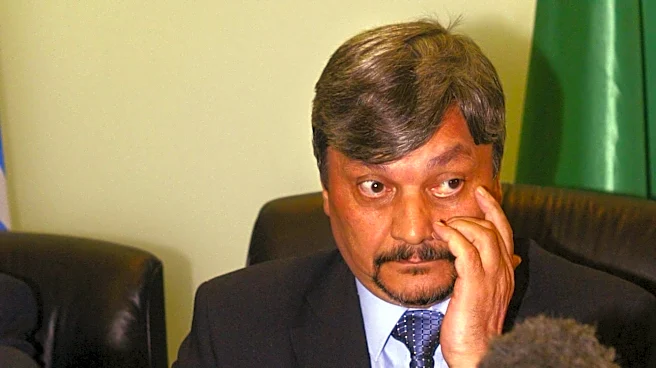
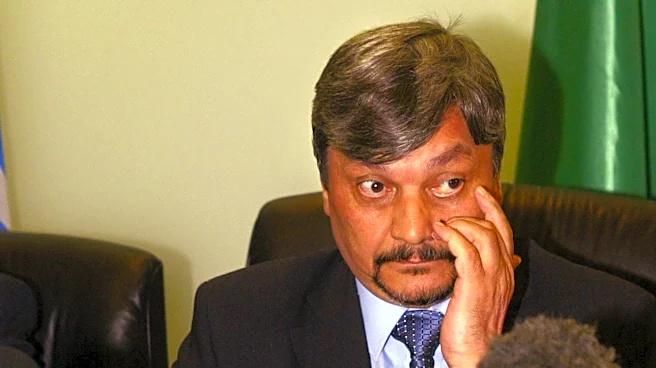
Iraq is actively negotiating with OPEC to secure a higher oil production ceiling, as confirmed by Oil Minister Basim Mohammed Khudair. This push is driven by Iraq's ambition to expand its energy sector and comes just before the wider OPEC+ group convenes
on Sunday to establish its output policy for 2027. While Iraq seeks to have its future quota calculated based on a 6 million barrels per day (bpd) production capacity, a third-party assessment commissioned by OPEC+ has estimated Iraq's capacity at a lower 4.9 million bpd. This discrepancy presents a challenge for Iraq's negotiation efforts. Sources indicate that OPEC+ members have an agreement in principle to maintain current production targets for the first quarter of 2027, with discussions complicated by uncertainty surrounding the Iran war and ongoing disagreements over capacity estimates among members. Russian Deputy Prime Minister Alexander Novak stated that the capacity review would be finalized by year-end.
Why It's Important?
The ongoing negotiations between Iraq and OPEC for a higher oil quota are significant for global energy markets and the internal dynamics of the OPEC+ alliance. An increased quota for Iraq, the second-largest producer within OPEC, could lead to a substantial rise in global oil supply, potentially influencing international oil prices. This situation also highlights the internal pressures within OPEC+, where individual members' aspirations for higher production often clash with the group's collective strategy to stabilize markets. The disagreement over production capacity estimates underscores a fundamental challenge for OPEC+ in setting equitable and effective quotas. Furthermore, the context of a projected global oil surplus in 2027, as forecasted by Rystad Energy, adds pressure on OPEC+ to carefully manage its production policy to avoid market oversupply and price declines, impacting both oil-producing nations and global consumers.
What's Next?
OPEC+ oil ministers are scheduled to hold a series of four meetings on Sunday to finalize their production policy for the first quarter of 2027. Despite Iraq's request, the prevailing sentiment among sources suggests that the group will likely maintain current output targets. The completion of the capacity review by the end of the year will be crucial in informing future quota decisions. The outcome of these meetings will be closely watched by global markets for indications of future oil supply levels and price stability. The ongoing discussions also carry the potential for further internal disagreements within OPEC+, especially if countries like Iraq and Kazakhstan continue to challenge their assessed production capacities. The long-term stability of the OPEC+ alliance could be tested by these internal pressures and external market conditions.
Beyond the Headlines
The struggle over production quotas within OPEC+ reflects a broader tension between national economic development goals and the collective action required to manage a global commodity market. Iraq's insistence on a higher quota, driven by its need to develop energy infrastructure, illustrates how domestic priorities can challenge international agreements. The departure of countries like the United Arab Emirates and Angola from OPEC in recent years, due to similar disagreements over production limits, signals a potential trend of fragmentation within the organization. If more members prioritize individual production increases over collective market management, OPEC's ability to influence global oil prices and supply could diminish significantly. This could lead to a more volatile and less predictable global oil market, with implications for energy security and economic planning worldwide.