





What's Happening?
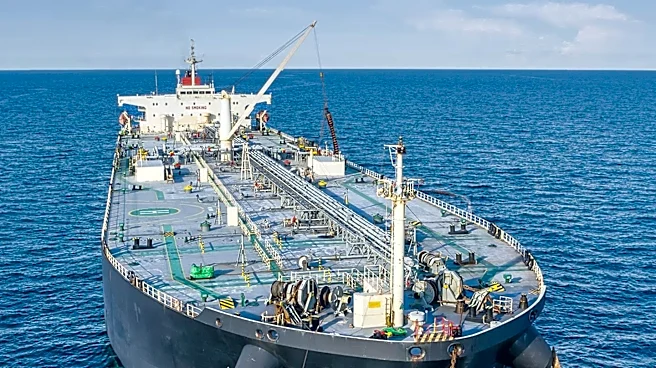
Global oil and shipping group Monjasa has acquired five sister tankers, marking its largest-ever tonnage acquisition. This deal involves five 16,621-dwt product tankers from German shipowner Bernhard Schulte. Four of these vessels—Monjasa Tracer, Monjasa Tuner,
Monjasa Twister, and Monjasa Tracker—have already been delivered and are operational in West Africa and Northwest Europe. The final vessel, Monjasa Trigger, is expected to be delivered by the end of November 2026. According to Group CEO Anders Østergaard, this acquisition is part of an ongoing fleet renewal strategy and aims to enhance the company's supply capabilities and flexibility, particularly in West Africa. The company completed 16,741 marine fuels operations in 2025, and these new vessels are expected to further strengthen its ability to serve diverse markets and adapt to global demand shifts.
Why It's Important?
This significant fleet expansion by Monjasa is poised to have a notable impact on the marine fuels supply chain, particularly in West Africa. By increasing its tonnage, Monjasa can enhance its operational efficiency and reliability, which is crucial for the consistent supply of marine fuels to the shipping industry. The acquisition of sister vessels offers operational benefits, including standardized maintenance and crew training, leading to cost efficiencies and improved service delivery. This move could strengthen Monjasa's competitive position in key markets, potentially influencing pricing and availability of marine fuels for other operators. For U.S. shipping companies and those with operations in West Africa, a more robust and flexible fuel supply network could translate into more stable logistics and potentially reduced operational costs, supporting broader trade and economic activities in the region.
What's Next?
With the majority of the new tankers already deployed and the final vessel expected by late November 2026, Monjasa will focus on integrating these assets into its global supply network. The immediate impact will be seen in strengthened West African operations, with potential for commercial freight trading and future deployment in other regions. The company's ability to leverage the operational benefits of having five sister vessels will be key to realizing the full potential of this acquisition. Competitors in the marine fuels sector will likely monitor Monjasa's expanded capabilities, potentially leading to strategic adjustments in their own operations or market approaches. The increased capacity could also influence regional fuel prices and supply dynamics, benefiting or challenging various stakeholders in the shipping and energy sectors.
Beyond the Headlines
The acquisition of these tankers highlights a broader trend in the shipping industry towards fleet modernization and strategic expansion to meet evolving global demand and enhance operational resilience. The emphasis on sister vessels suggests a move towards greater standardization and efficiency in fleet management, which can have long-term implications for safety, environmental compliance, and cost control within the maritime sector. This investment also underscores the continued importance of West Africa as a critical hub for marine fuels, reflecting ongoing economic development and trade activities in the region. The strategic decisions made by major players like Monjasa can ripple through the global supply chain, influencing energy security, trade routes, and the overall economic landscape for maritime commerce.