









What's Happening?
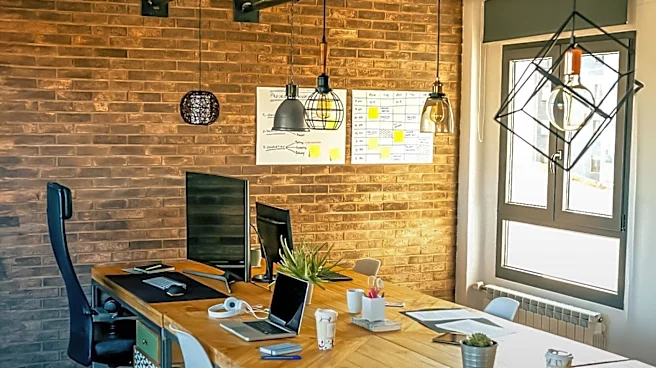
In Boise, Idaho, architects are increasingly incorporating collaborative spaces into both office and residential designs. Eamonn Parke, a local architect, highlights the trend towards creating environments that foster communication and teamwork. This
shift is evident in places like Trailhead and Kiln, which offer shared office spaces designed to enhance performance and employee satisfaction. These spaces include breakout areas, high-tech rooms, and flexible furniture arrangements. The trend is not limited to commercial spaces; educational institutions and residential designs are also adopting collaborative elements. This approach is supported by research from Haworth, a global furniture maker, which suggests that such environments can improve workplace performance and employee value.
Why It's Important?
The move towards collaborative spaces reflects a broader shift in workplace and residential design, emphasizing flexibility and adaptability. For businesses, these spaces can lead to improved communication and productivity, potentially giving companies a competitive edge. In education, collaborative spaces can enhance learning by encouraging interaction and focused study. For the residential market, the integration of collaborative spaces can cater to the growing trend of remote work, offering homeowners versatile environments that support both personal and professional activities. This trend signifies a change in how spaces are utilized, with a focus on creating environments that support diverse activities and needs.
What's Next?
As Boise continues to grow, the demand for innovative architectural solutions is likely to increase. Architects may continue to explore new ways to integrate collaborative spaces into various settings, driven by client feedback and technological advancements. The trend could lead to more partnerships between architects and other industries, fostering a culture of innovation and shared learning. Additionally, as remote work becomes more prevalent, the demand for residential designs that accommodate work-from-home setups may rise, influencing future architectural trends.
Beyond the Headlines
The rise of collaborative spaces also raises questions about privacy and individual work preferences. While these environments can enhance teamwork, they may not suit everyone, particularly those who require quiet or solitude to perform their best. Architects and designers will need to balance these considerations, ensuring that spaces are inclusive and adaptable to different working styles. Furthermore, the trend highlights the importance of sustainable design, as flexible spaces can reduce the need for constant renovations and resource consumption.