
What's Happening?
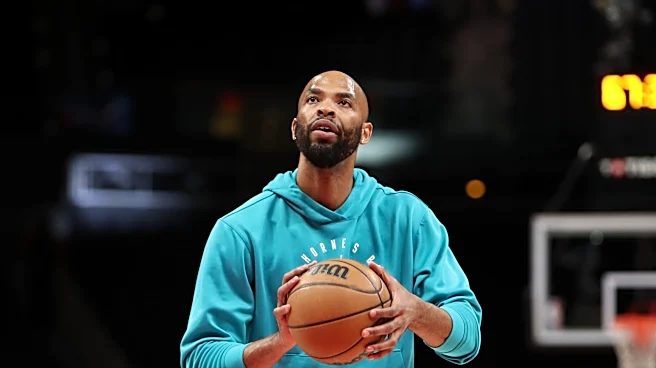
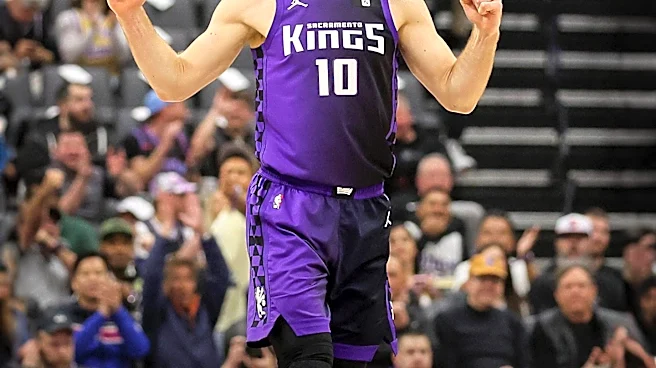
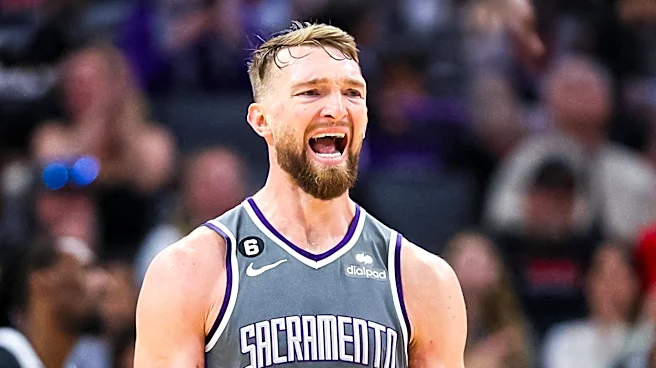
A potential trade involving Sacramento Kings player Domantas Sabonis to the Charlotte Hornets is facing a significant obstacle due to the Kings' steep asking price. According to NBA insider Jake Fischer
of Bleacher Report, the Kings are seeking substantial positive value and draft compensation for Sabonis, a price that the Hornets and other interested teams are currently unwilling to meet. Sabonis, a power forward/center, is currently under a five-year, $216.6 million contract with two years and $94 million remaining through the 2027-28 season. He is also eligible for an extension and has recently changed his representation, indicating a potential desire for a new max contract with a different team. Despite the Hornets' interest, previous attempts to finalize a deal have failed because Charlotte rejected the Kings' demand for multiple draft assets.
Why It's Important?
This trade standoff is important for the U.S. professional basketball landscape as it highlights the complexities of player valuations and team building strategies in the NBA. For the Sacramento Kings, securing a high return for a valuable asset like Sabonis is crucial for their future competitiveness and roster development. For the Charlotte Hornets, acquiring a player of Sabonis' caliber could significantly boost their performance and fan engagement, but overpaying could jeopardize their long-term financial flexibility and draft capital. The situation also impacts other teams in the league, as Sabonis' availability and eventual trade value could influence the market for other big men. The outcome of this negotiation will demonstrate the current market dynamics for star players and the willingness of teams to commit significant resources for immediate impact versus future assets. It also underscores the power dynamics between player agents and front offices in shaping player movement.
What's Next?
The immediate future of a Domantas Sabonis trade to the Charlotte Hornets remains uncertain unless the Sacramento Kings adjust their asking price. Jake Fischer suggests that if the Kings' demands become more reasonable, the Hornets could re-emerge as a strong suitor. This implies a waiting game, where both teams will likely assess their options as the offseason progresses. The Kings may explore other trade partners or consider keeping Sabonis if their valuation is not met. Sabonis' new representation will likely continue to explore extension opportunities, which could influence his trade market. The Hornets, meanwhile, will need to decide whether to pursue other targets or hold out for a more favorable deal for Sabonis. The situation could evolve rapidly as teams prepare for the upcoming season and the trade deadline.
Beyond the Headlines
Beyond the immediate trade negotiations, this scenario reflects a broader trend in the NBA where player empowerment and contract extensions play a significant role in team dynamics. Sabonis' change of representation and desire for a max contract highlight the financial motivations that often drive player movement, even when under existing long-term deals. This situation also touches upon the strategic dilemma faced by smaller market teams like the Kings and Hornets: how to retain or acquire star talent while managing salary cap implications and draft asset depletion. The ethical considerations revolve around fair market value for players and the balance between a player's desire for a new contract and a team's commitment to its existing roster. The long-term shift could see more frequent player movement driven by contract demands, forcing teams to be more agile in their roster construction and asset management.