


What's Happening?
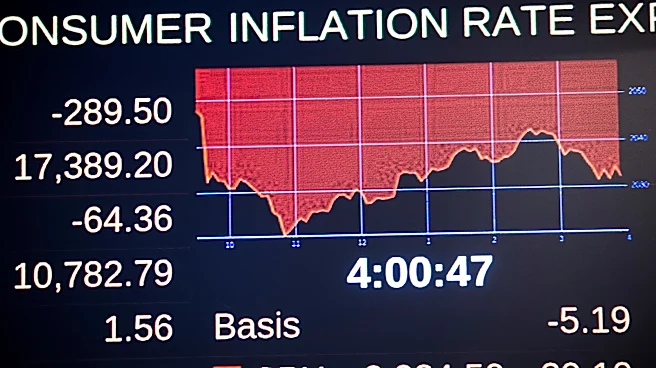
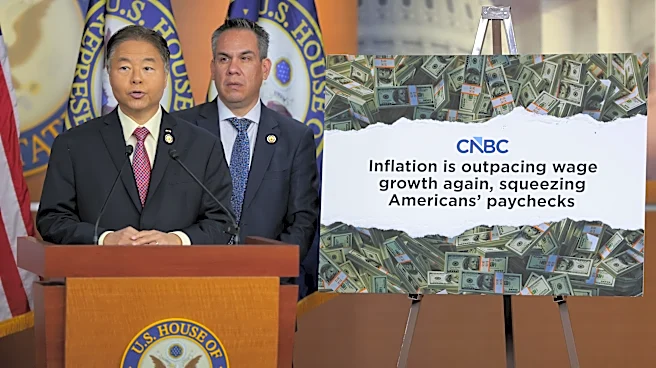
U.S. inflation data for October showed an unexpected upside surprise, with overall consumer prices rising 0.4% month-over-month and core prices increasing 0.3%, both exceeding expectations. This marks the second consecutive month of broad-based inflation surprises.
Chicago Fed President Goolsbee described the data as 'distressing' and 'borderline disturbing.' The increase was driven by a 0.5% jump in food prices and a 0.7% rise in energy prices. Both goods and services prices increased by 0.4% month-over-month, with services inflation showing more sustained pressure. While shelter costs rose 0.3%, rent of primary residence advanced a more modest 0.2%. This persistent inflation has solidified expectations for a Federal Reserve rate hike in December 2026 and significantly increased the odds of another hike in the first quarter of 2027, with March being more likely than January.
Why It's Important?
This sustained inflationary pressure has significant implications for the U.S. economy, businesses, and consumers. The Federal Reserve's continued hawkish stance, driven by these inflation figures, means a 'higher for longer' interest rate environment. This will translate into increased borrowing costs for businesses, impacting investment decisions, and for consumers, affecting mortgages, auto loans, and credit card rates. Industries sensitive to interest rates, such as housing, are already feeling the pinch, with existing home sales dropping to their lowest level since August 2010. While higher inventory in the housing market might eventually temper prices, the immediate effect is reduced affordability and activity. For the broader economy, persistent inflation erodes purchasing power, particularly for lower and middle-income households, and can create uncertainty for long-term financial planning and investment strategies. Businesses may also face challenges in managing input costs and maintaining profit margins.
What's Next?
The Federal Reserve is now widely expected to implement a 25-basis-point rate hike in December 2026. Following this, the probability of another rate hike in the first quarter of 2027, likely in March, has substantially increased. Policymakers will closely monitor future inflation reports, particularly services inflation, to guide their decisions. The 'higher for longer' theme implies that interest rates will remain elevated for an extended period, impacting various sectors of the economy. Consumers should anticipate continued pressure on borrowing costs, while businesses will need to adapt to a more restrictive monetary policy environment. The housing market is expected to remain under pressure, with potential for further declines in sales and a cap on price increases due to higher inventory and reduced affordability. Geopolitical events, especially those affecting energy prices, remain a key risk that could further influence the inflation trajectory and the Fed's response.
Beyond the Headlines
The ongoing battle against inflation highlights a fundamental tension between economic growth and price stability. The Fed's aggressive stance, while aimed at curbing inflation, risks slowing economic activity and potentially triggering a recession, albeit with a low probability according to some forecasts. The 'distressing' nature of the inflation data, as noted by Chicago Fed President Goolsbee, underscores the challenge policymakers face in achieving a 'soft landing.' This situation also brings into focus the uneven impact of inflation, disproportionately affecting households with less disposable income. The long-term implications could include a re-evaluation of supply chain resilience, domestic production capabilities, and energy policy to mitigate future inflationary shocks. The current economic climate also prompts a deeper look into the effectiveness of monetary policy tools in addressing supply-side driven inflation, suggesting that broader fiscal and structural policies may also be necessary.