






What's Happening?
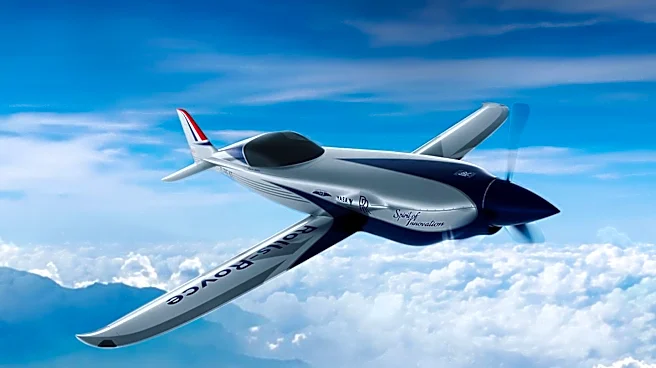
Heart Aerospace has successfully completed the first flight of its X1 demonstrator, the world's largest battery-electric aircraft, at Plattsburgh International Airport in New York. The flight, which lasted 27 minutes, reached an altitude of 1,100 feet
and demonstrated the potential of electric propulsion in commercial aviation. The X1 is a full-scale demonstrator for Heart's upcoming ES-30 production aircraft, a 30-seat hybrid-electric regional airliner. The flight was conducted under an FAA Special Airworthiness Certificate and used approximately $5 worth of electricity, highlighting the cost efficiency of electric propulsion compared to traditional jet fuel.
Why It's Important?
This development marks a significant step forward in the aviation industry's transition towards more sustainable and cost-effective technologies. Electric aircraft like the X1 and the forthcoming ES-30 have the potential to drastically reduce operating costs and environmental impact, offering a viable alternative to traditional fuel-powered aircraft. With major airlines like United Airlines and Air Canada backing Heart Aerospace, the successful flight of the X1 could accelerate the adoption of electric aircraft in commercial aviation, potentially reshaping airline economics and reducing the cost of air travel for passengers.
What's Next?
Heart Aerospace plans to continue developing the ES-30, with entry into service targeted for 2031. The company is working on advancing battery technology and improving crew efficiency to further enhance the cost advantages of electric aircraft. Flight testing for the ES-30 is scheduled to begin in 2028, and Heart is currently developing the first pre-production model at its Los Angeles facility. As the program progresses, Heart aims to expand its technology platform for electric airliners, potentially transforming regional aviation.