





What's Happening?
The state of New Jersey has filed an antitrust lawsuit against Amazon, alleging that the company's innovative delivery service partner (DSP) network constitutes a monopsony. New Jersey Attorney General Jennifer Davenport claims this system suppresses
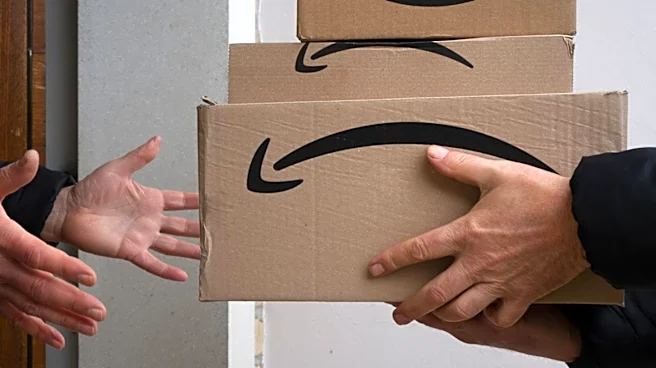
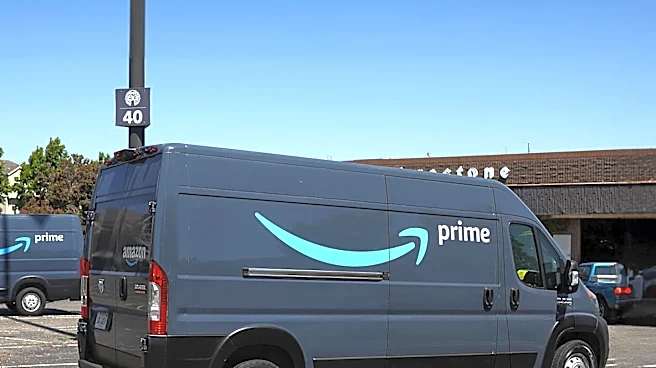
drivers' pay by discouraging contractors from recruiting each other's drivers. Amazon's DSP model involves contracting with local companies to handle the 'last mile' of delivery, from local warehouses to customer porches. The lawsuit argues that Amazon has created a market around itself, effectively making it a monopsonist by excluding larger delivery employers like FedEx, UPS, and USPS from its market definition. Despite Amazon's claim that its contractors' drivers will average nearly $24 an hour, exceeding the Labor Department's median for light-truck drivers, the state seeks unspecified 'structural relief' that could significantly alter Amazon's delivery operations. This legal action comes as Amazon has been delivering more parcels than FedEx or UPS while generating less than half the revenue per parcel, largely due to its DSP network.
Why It's Important?
This lawsuit carries significant implications for the U.S. e-commerce and logistics sectors, potentially reshaping how major companies manage their delivery operations and interact with independent contractors. If New Jersey's claims are upheld, it could set a precedent for how states define and prosecute monopsony power, particularly in rapidly evolving gig economy models. For Amazon, a negative outcome could lead to increased operational costs, slower delivery times, and a complete overhaul of its successful DSP program, which currently supports at least 14,000 jobs in New Jersey alone. This could also impact consumers through higher delivery fees and reduced service efficiency. The case highlights a broader tension between innovative business models that prioritize efficiency and regulatory concerns about fair labor practices and market competition. The outcome will be closely watched by other states and federal regulators considering similar actions against large tech and logistics firms.
What's Next?
The New Jersey lawsuit will proceed, with the state seeking 'structural relief,' treble damages, punitive damages, and maximum civil penalties against Amazon. This could lead to a significant restructuring of Amazon's delivery network, potentially forcing the company to work with fewer, larger contractors, which could increase delivery costs and slow service. Separately, New York City is considering a bill, the Delivery Protection Act, which would require Amazon to directly hire the drivers currently employed by its contractors, effectively dismantling the local small businesses Amazon partners with. Amazon has warned New York shoppers that this bill could add up to $5 to each order and has threatened to move its distribution centers outside the city if it passes. These legal and legislative challenges indicate a growing regulatory scrutiny over Amazon's labor practices and market dominance, with potential long-term impacts on its business model and consumer services.
Beyond the Headlines
The New Jersey lawsuit against Amazon delves into complex legal and economic questions surrounding the definition of a monopsony in the modern economy. The state's argument that Amazon has created a market around itself, thereby becoming a monopsonist, challenges traditional antitrust interpretations. This case could redefine the boundaries of antitrust law, particularly concerning companies that leverage extensive contractor networks for their core operations. It also raises ethical considerations about the balance between fostering innovation, which Amazon's DSP program has demonstrated by making same-day delivery common, and ensuring fair compensation and working conditions for drivers. The outcome could influence how other industries with similar contractor-based models are regulated, potentially leading to a re-evaluation of labor laws and market competition in the gig economy. The debate also touches on the role of government in regulating highly efficient, consumer-benefiting systems when labor concerns are raised.