









What's Happening?
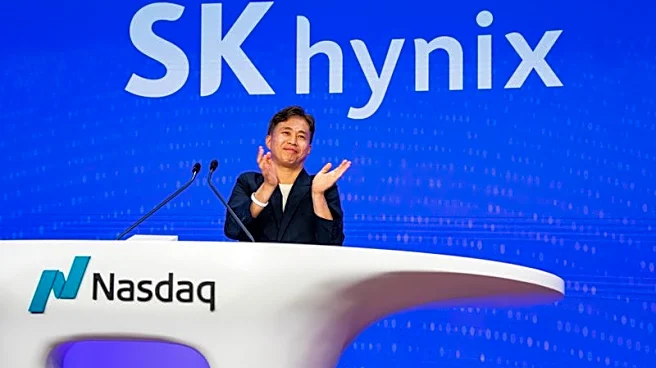
South Korean semiconductor company SK hynix has announced a major US listing, aiming to raise $26.5 billion by issuing approximately 18 million shares on the Nasdaq index. This move is part of the company's strategy to leverage the ongoing global demand
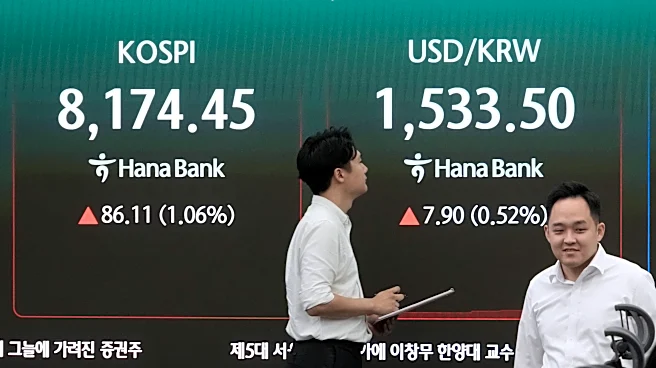
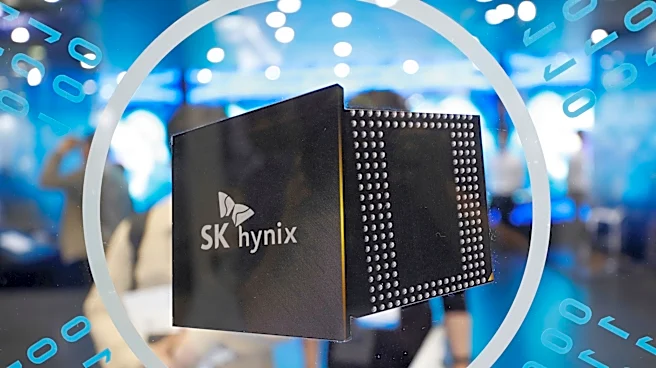
for artificial intelligence (AI) data centers. SK hynix, a key supplier of advanced memory chips to Nvidia, has seen its profits surge as the race to build AI infrastructure intensifies. The company's shares have risen significantly, with a 2.7% increase on Seoul's Kospi index following the announcement. The listing, which involves American depositary shares (ADS), has attracted substantial interest, being oversubscribed more than seven times. The offering is led by major financial institutions including BofA Securities and Goldman Sachs.
Why It's Important?
The listing of SK hynix on the US market underscores the growing importance of AI technology and the semiconductor industry. As AI applications expand, the demand for high-performance memory chips is expected to increase, benefiting companies like SK hynix. The funds raised from this listing will enable SK hynix to invest in new facilities and technology, potentially enhancing its competitive position against rivals like Samsung and Micron. This development also highlights the strategic economic ties between South Korea and the US, as well as the global nature of the tech industry. The success of this listing could influence other international tech firms considering similar moves.
What's Next?
SK hynix plans to use the proceeds from the US listing to fund the construction of a new semiconductor cluster in Yongin, South Korea, and an advanced packaging facility in Cheongju. These projects are part of a broader public-private investment initiative aimed at strengthening South Korea's position in the global semiconductor market. As the company expands its production capabilities, it may further challenge its competitors in the high-bandwidth memory market. Additionally, the listing could prompt discussions on how South Korea should manage the economic benefits from the AI boom, including potential tax revenues and labor negotiations.