




What's Happening?
GridAI Technologies Corp. has announced a definitive agreement to acquire Pronghorn Resources LLC, a natural gas and energy infrastructure platform located in Wyoming's Powder River Basin. This acquisition aims to create a vertically integrated provider
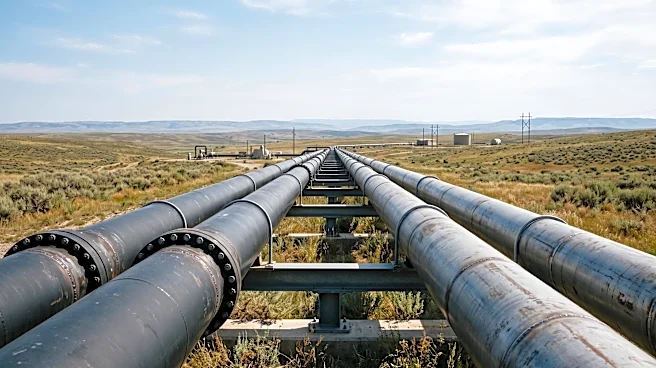
of dedicated power and infrastructure for the rapidly expanding artificial intelligence (AI) and hyperscale data center industries. Pronghorn Resources brings approximately $1.7 billion in existing energy infrastructure, including nearly 100 million cubic feet per day of gross natural gas production, over 450 miles of owned pipelines, and about 1,000,000 acres of mineral and leasehold interests. GridAI plans to leverage these assets to develop reliable, dispatchable electric power, targeting initial delivery in 2027. The company's strategy involves using Pronghorn's established energy business to fuel dedicated natural gas-fired power generation, reducing reliance on conventional utility interconnection timelines. This move positions GridAI to capitalize on Wyoming's growing appeal as a hub for AI infrastructure, supported by its energy resources and favorable state policies.
Why It's Important?
This acquisition is significant as it directly addresses the critical constraint of reliable power for AI infrastructure growth in the U.S. The demand for electricity from data centers is projected to double by 2030, with AI-specific demand tripling, creating a substantial power gap. By integrating natural gas production with power generation, GridAI aims to offer greater certainty in long-term energy availability and accelerated deployment schedules for hyperscale AI computing campuses. This strategy could mitigate the risks associated with grid connection delays and turbine shortages that are currently slowing data center projects. Furthermore, the move highlights Wyoming's emergence as a strategic location for energy-intensive AI infrastructure, offering a model for states with abundant natural resources to attract tech investment while potentially reducing strain on existing utility grids. This could influence future state-level policies regarding data center development and energy sourcing.
What's Next?
GridAI Technologies is targeting initial power delivery in 2027, with a phased development strategy to expand its capacity in alignment with customer commitments and project approvals. The company plans to pursue long-term power supply agreements and secure ownership interests in the AI campuses it helps develop. Additionally, GridAI has acquired exclusive Wyoming development rights for FANCO's EAGL-1 240 MWe SMR platform and Bridge Power, indicating a longer-term strategy to integrate advanced nuclear power. The company also intends to evaluate the integration of carbon capture and geological sequestration with its natural gas-fired power generation infrastructure, leveraging the Powder River Basin's potential for CO2 storage. The transaction is anticipated to close on or before November 22, 2026, after which GridAI will focus on executing its integrated energy and AI infrastructure development strategy in Wyoming.
Beyond the Headlines
This acquisition represents a broader trend of AI infrastructure developers seeking self-sufficient, dedicated power solutions to overcome grid limitations and accelerate deployment. The integration of fuel production and power generation by GridAI could set a precedent for future AI data center developments, particularly in regions with significant natural gas reserves. The emphasis on Wyoming's constructive state-level policy and existing industrial infrastructure suggests a potential shift in where major AI investments are concentrated, moving towards states that can offer integrated energy solutions. The long-term vision to incorporate small modular reactors (SMRs) and carbon capture technologies also points to an evolving strategy for sustainable and reliable power generation in the AI era, addressing both energy demand and environmental concerns. This could lead to new partnerships between energy companies and tech giants, reshaping the energy landscape for high-performance computing.