



What's Happening?
Nippon Steel has acquired U.S. Steel for $14.9 billion, signaling a significant transformation for the American steel industry. As part of this acquisition, Nippon Steel has committed to investing $11 billion across U.S. Steel's operations by the end
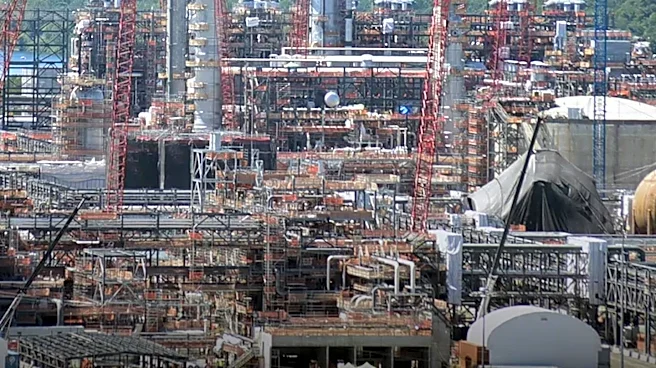
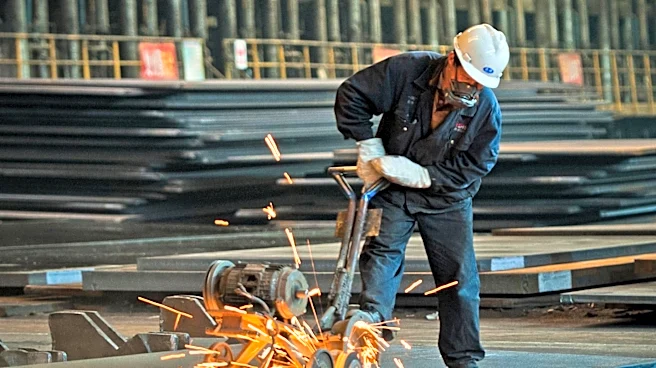
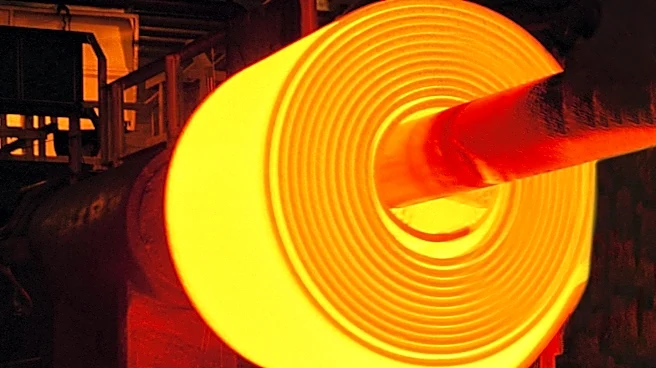
of 2028. A key component of this investment is a $3 billion allocation for a new hot-strip mill at Mon Valley Works in Pennsylvania, with a targeted start-up in the second half of 2029. This new mill is projected to increase annual production capacity by 2.2 million to 3.5 million tons, representing approximately 59% growth. The modernization efforts extend beyond new equipment, focusing on deploying Japanese engineering expertise, more efficient steelmaking technologies, and installing new walking beam furnaces and an in-line slab sizing press. These initiatives aim to improve productivity, energy efficiency, production yield, and quality stability, enhancing the capability to supply high-quality steel to sectors like automotive, home appliance, and energy.
Why It's Important?
This acquisition and subsequent investment by Nippon Steel are crucial for the future competitiveness of the U.S. steel industry. It represents a substantial infusion of capital and advanced technology into aging American steelmaking assets, potentially transforming them into high-performance production hubs. The modernization of facilities like the Edgar Thomson Steel Works, a historic plant that was facing closure, demonstrates how foreign investment can revive traditional industrial sectors. The deployment of Japanese engineering expertise and advanced steelmaking technologies could set new benchmarks for efficiency and quality in U.S. steel production. This move also addresses the increasing importance of localization and supply-chain resilience, strengthening domestic steel production capabilities for strategic industries and national security. For U.S. industries reliant on steel, this could mean access to higher quality materials and more stable domestic supply in the long term.
What's Next?
The new hot-strip mill at Mon Valley Works is slated to begin operations in the second half of 2029, marking a significant milestone in the modernization plan. Over the next few years, the focus will be on implementing the $11 billion investment, including the construction of new facilities and the upgrade of existing ones. This will involve integrating Japanese engineering expertise and advanced technologies into U.S. operations. The success of this transformation will be closely watched as a case study for how traditional steelmaking assets can be repositioned for the future. Stakeholders, including U.S. lawmakers, labor unions, and domestic steel producers, will likely monitor the progress and impact of these investments on job creation, environmental standards, and overall market competitiveness. The increased capacity and improved quality could also influence U.S. trade policies and the balance between domestic production and imports.
Beyond the Headlines
The acquisition of U.S. Steel by Nippon Steel highlights a broader trend of global consolidation and technological transfer in heavy industries. It underscores the idea that in an increasingly interconnected global economy, foreign investment can be a critical driver for industrial transformation and competitiveness. This development could also spark discussions about the balance between national industrial heritage and the need for modernization through international partnerships. The integration of advanced Japanese steelmaking technologies into U.S. facilities could lead to a ripple effect, encouraging other domestic producers to adopt similar innovations to remain competitive. Furthermore, the focus on enhancing quality and efficiency for sectors like automotive and energy aligns with global trends towards more sustainable and high-performance materials, potentially positioning the revitalized U.S. Steel operations at the forefront of these evolving demands.