


What's Happening?
The 'September Charm' Japanese anemone (Anemone × hybrida 'September Charm') is highlighted as a key perennial for fall gardens, providing continuous blooms from late August until the first hard frost. This plant is part of a recommended trio of perennials
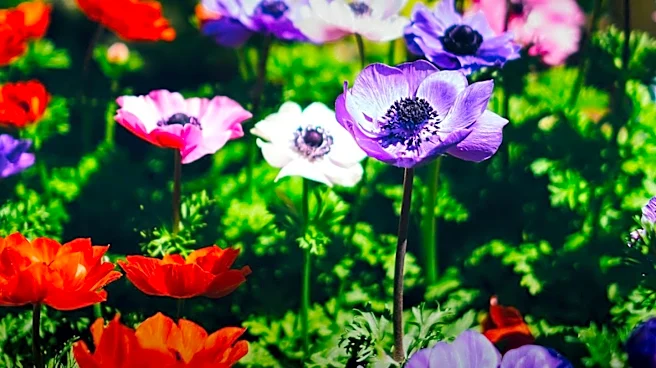
designed to offer year-round garden interest, alongside McKana hybrid columbines for spring and 'Blue Danube' Stokes's aster for summer. The 'September Charm' anemone is noted for its three-foot tall flower stalks that typically do not require staking. Its rose-pink petals surround golden stamens and a green central pistil, creating a charming visual effect, especially when swaying in the breeze. The plant thrives in partial shade to full sun and can adapt to various moist soil types, including heavy clay. Gardeners are advised that its rhizomatous spread may require management to prevent unwanted intrusions. This perennial is also known for its ability to support pollinators, such as butterflies.
Why It's Important?
The inclusion of 'September Charm' Japanese anemone in garden planning is significant for U.S. homeowners and landscape designers seeking to extend the blooming season and enhance garden aesthetics into the fall. By providing late-season color, this perennial contributes to sustained visual appeal when many other plants have finished flowering. Its hardiness (USDA Zones 5–8) makes it suitable for a wide range of climates across the U.S., offering a reliable option for gardeners. Furthermore, its role in supporting butterflies and other pollinators underscores its ecological value, contributing to local biodiversity and ecosystem health. For the horticulture industry, promoting such resilient and attractive late-season bloomers can drive sales of specific plant varieties and related gardening products, catering to a growing interest in sustainable and long-lasting garden designs.
What's Next?
Gardeners planning their perennial beds can incorporate 'September Charm' Japanese anemone to ensure vibrant fall displays. The plant's adaptability to various light conditions and soil types makes it a versatile choice for different garden settings. For optimal growth, it should be planted in well-drained, humusy soil, with compost added to improve soil structure. As the plant matures over four to five years, its flower production may slow, indicating a need for division to refresh the bed and provide new plants for sharing. Companion planting with dark green rhododendrons can make the rose-pink flowers of the anemone stand out, while other suitable neighbors include blue sage, flax, and New England asters. Continued interest in pollinator-friendly gardens may further boost the popularity of this and similar perennials.
Beyond the Headlines
The emphasis on perennials like 'September Charm' Japanese anemone reflects a broader trend in U.S. gardening towards creating sustainable, low-maintenance landscapes that offer extended seasonal interest. This shift moves beyond annual plantings that require frequent replacement, favoring plants that return year after year and contribute to ecological stability. The plant's ability to thrive in various conditions and its resistance to deer and rabbits also align with contemporary gardening challenges, such as wildlife management and resource conservation. Ethically, choosing plants that support local wildlife, like pollinators, contributes to environmental stewardship. Culturally, the act of gardening with long-lasting perennials fosters a deeper connection to natural cycles and can enhance community through the sharing of divisions and gardening knowledge.