




What's Happening?
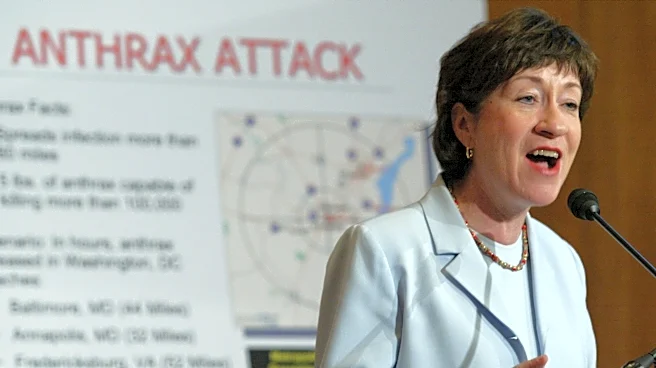
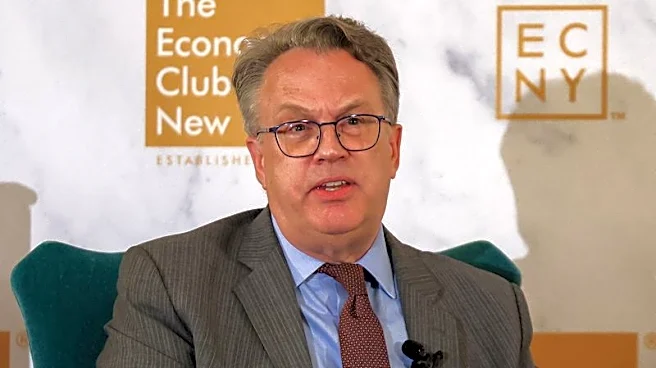
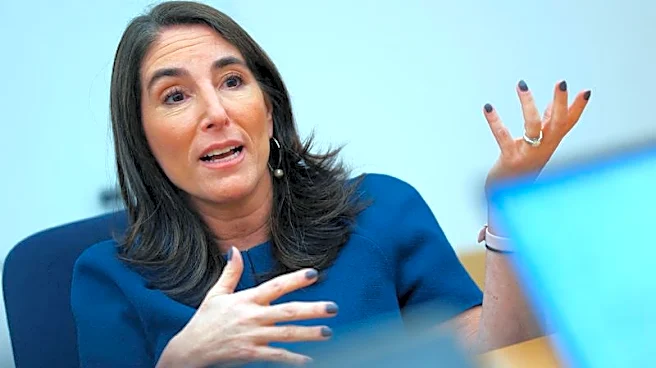
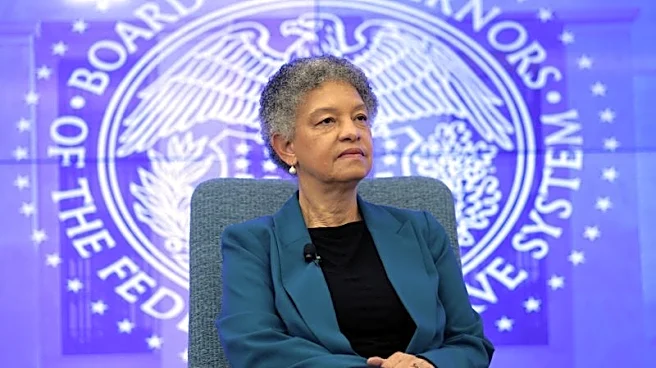
Federal Reserve Bank of Boston President Susan Collins has expressed support for a measured approach to further interest rate increases. She argues that gradual tightening would provide the U.S. economy with more room to absorb uncertainty as policymakers
work to bring inflation back to its 2% target. Collins noted that recent economic data, particularly price data over the past three months and evidence of a firmer labor market, have led her to anticipate that interest rates could end up somewhat higher than she previously expected over the coming year. She emphasized that her preference for gradual tightening should not be interpreted as a commitment to a fixed schedule of increases, allowing for flexibility as economic conditions evolve. Collins also highlighted that the risks to the economy remain balanced, with elevated inflation pressures alongside signs of stability and potential strengthening in the labor market.
Why It's Important?
President Collins's stance on gradual rate hikes provides insight into the ongoing debate within the Federal Reserve regarding the pace and extent of monetary policy adjustments. Her view suggests a cautious approach, aiming to avoid an overly aggressive tightening that could stifle economic growth while still addressing persistent inflation. This perspective is crucial for businesses and consumers, as it indicates that borrowing costs may continue to rise, albeit at a slower pace, impacting everything from mortgage rates to corporate lending. The acknowledgment of 'two-sided' risks—both inflation and job stability—underscores the complexity of the Fed's dual mandate. This balanced view could lead to more predictable, incremental policy changes, allowing the economy more time to adapt, but it also means that the fight against inflation may be prolonged, potentially affecting purchasing power and investment returns over time.
What's Next?
The Federal Reserve is expected to continue its path of interest rate adjustments, with markets widely anticipating another 25-basis-point increase at their upcoming meeting, followed by a further move in January. President Collins's remarks suggest that while the Fed is committed to bringing inflation down, it will likely do so with a degree of caution, avoiding rapid, large increases. Future policy decisions will depend heavily on incoming economic data, particularly inflation readings and labor market indicators. The Fed will also consider the impact of longer-term borrowing costs, which have already increased this year, on overall demand. Businesses and individuals should prepare for a continued environment of gradually rising interest rates, which will influence financial planning, investment strategies, and consumer spending decisions in the coming months.
Beyond the Headlines
President Collins's emphasis on a 'measured approach' reflects a broader concern within the Federal Reserve about the potential for policy overshoots. Rapid and significant rate hikes, while effective in curbing inflation, can also trigger an economic slowdown or even a recession. By advocating for gradual increases, Collins suggests a strategy that prioritizes economic stability and allows for continuous assessment of the policy's impact. This approach also highlights the internal diversity of opinion within the Fed, where different officials may weigh the risks of inflation versus unemployment differently. The ongoing debate and the nuanced communication from Fed officials are critical for market participants to interpret the central bank's intentions and adjust their expectations accordingly, influencing everything from bond yields to equity valuations and the overall economic sentiment.