







What's Happening?
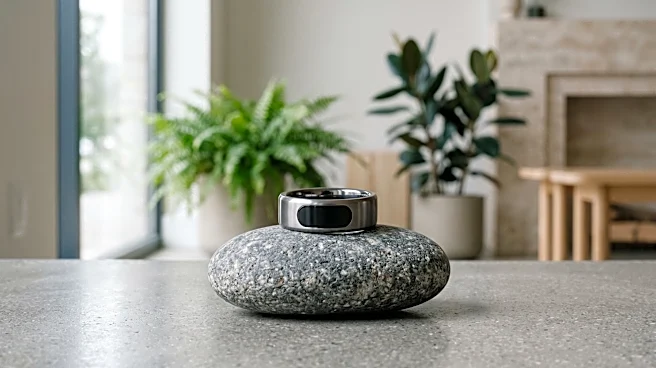
Oura has launched a new feature called 'Jet Lag Plan' for its Oura Ring users, designed to help mitigate the effects of jet lag. This personalized plan is generated based on a user's flight itinerary, individual sleep patterns, and chronotype. The feature provides
recommendations for sleep, light exposure, activity, and caffeine intake, specifically tailored for journeys that cross three or more time zones. Utilizing Oura's AI-powered support, Oura Advisor, the plan can adapt to changes in travel schedules. This new functionality is globally available to users with Gen 3 or newer Oura Ring hardware on both iOS and Android platforms, provided their device language is set to English. The development of this feature was informed by a National University of Singapore study that analyzed 1.5 million nights of de-identified Oura user sleep data.
Why It's Important?
The introduction of Oura's Jet Lag Plan is significant for the travel and wellness technology sectors. For frequent travelers, business professionals, and vacationers, jet lag can severely impact productivity, enjoyment, and overall well-being. By offering a personalized, data-driven approach to managing time zone changes, Oura aims to enhance the travel experience and reduce the negative health consequences associated with jet lag. This feature leverages wearable technology and AI to provide actionable health advice, potentially increasing the value proposition of the Oura Ring in a competitive market. It also highlights a growing trend in personalized health solutions, where technology is used to address specific physiological challenges faced by individuals, thereby improving quality of life and travel efficiency.
What's Next?
The immediate next step for Oura is the global rollout and user adoption of the Jet Lag Plan feature. As more users engage with the plan, Oura will likely gather additional data to refine and improve its AI algorithms, potentially leading to even more precise and effective recommendations. Competitors in the wearable tech and health monitoring space may observe the success of this feature and consider developing similar solutions to address travel-related health issues. Furthermore, the integration of such personalized health management tools could become a standard expectation for premium wearable devices, pushing the industry towards more proactive and preventative health support for users, especially those with dynamic lifestyles involving frequent travel.
Beyond the Headlines
Beyond its immediate utility, Oura's Jet Lag Plan signifies a broader shift towards predictive and personalized health interventions powered by AI and biometric data. This technology moves beyond simple tracking to offer prescriptive guidance, blurring the lines between a health monitor and a personal health coach. The ethical implications of collecting and utilizing extensive personal health data, even if de-identified, for such features will continue to be a point of discussion, particularly concerning data privacy and security. Moreover, the success of such tools could influence how employers view employee well-being during business travel, potentially leading to corporate adoption of similar technologies to optimize employee performance and health while on the road.